
Export desk
Bali Rattan Furniture Low MOQ Supplier: Honest Minimums
A low-MOQ Bali rattan furniture supplier works from one honest minimum: a mixed 20ft container that cube-outs, filled with as many designs as you like. No source verifies an industry-standard MOQ — every workshop negotiates per order. Trial orders and LCL shipments are handled case-by-case; send your item list on WhatsApp for a same-week answer.
- Loading FOB
- Semarang or Surabaya
- Container
- 20ft, 40ft or mixed
- Documents
- Invoice, B/L, COO, fumigation
- Reply
- One business day, Bali hours
That is the whole doctrine of this page. A rigid "minimum 50 pieces per model" describes a supplier's production convenience, not a market rule. Here is how small orders of mebel rotan (rattan furniture) actually get priced, consolidated, and shipped from Bali.
What Does "Low MOQ" Really Mean for Bali Rattan Furniture?
It means the economics of the container, not an arbitrary piece count.
Fill that volume and the order works, whether it holds 40 lounge chairs of one design or 15 different items.
Three practical consequences for small buyers:
-
You can mix freely
One 20ft box can carry anyaman (woven) dining chairs, a few daybeds, pendant shades, and mirror frames from several workshops, consolidated at an export warehouse in Jimbaran or Denpasar.
-
Per-model minimums are negotiable
A workshop may ask for 10-20 pieces per design to justify a jig setup, but that number flexes with the design and the season.
-
There is no universal MOQ to look up
Any site publishing one fixed number for all Bali rattan is simplifying to the point of fiction.
How Small Can a First Order Realistically Be?
Four routes, from smallest to standard. All figures below are indicative examples as of 2026, subject to change — real pricing is quote-based, per piece and per spec, from your item list.
Piece counts swing widely with the mix: stackable dining chairs pack tight, while wing chairs and hanging chairs eat cube. Before any deposit, ask for a cube-out simulation — a packing plan showing your exact item list filling the box. If the list falls short, the honest fixes are adding items, topping up with fast-moving fillers (baskets, trays, planters), or routing via LCL.
Why Can Bali Suppliers Accept Mixed Low-MOQ Containers at All?
Because Indonesia's rattan value chain is legally locked onshore, which keeps many small workshops in business.
Under Trade Regulation Permendag No. 38 of 2017, raw (unprocessed) rattan may not be exported from Indonesia, while semi-finished rattan and finished furniture can. Then-Trade Minister Enggartiasto Lukita, speaking in Cirebon and reported by ANTARA News, Indonesia's state news agency, confirmed the split: raw rotan stays, finished value leaves. The policy has been contested before — a prior ban was once lifted and re-evaluated — so treat it as the rule as of 2026, not a permanent guarantee.
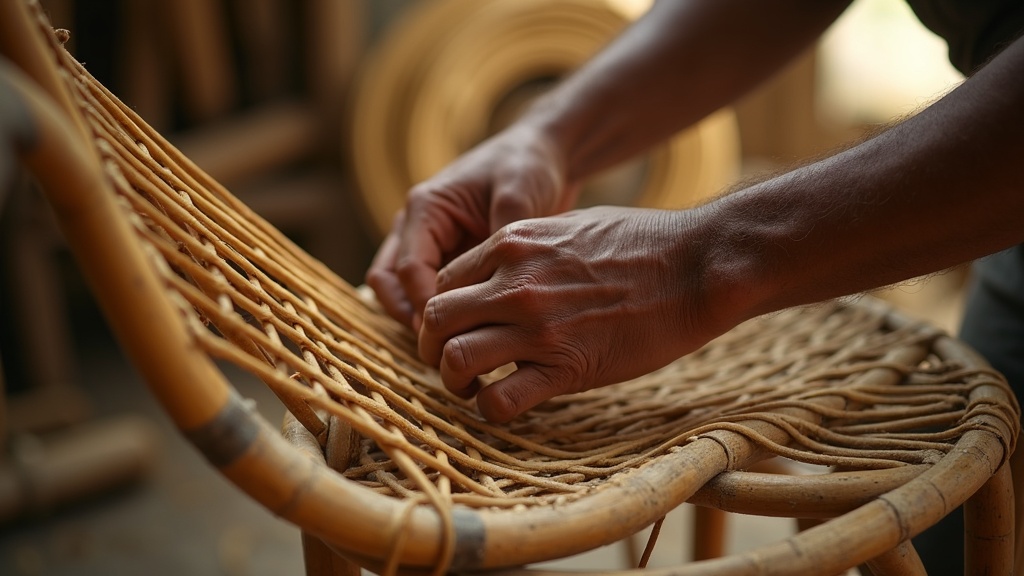
The practical effect: weaving (anyaman) and finishing capacity concentrates in workshops in Bali and Cirebon rather than migrating overseas. That density of small producers is what makes mixed consolidation possible — a single 20ft order can draw from four or five makers, with Jimbaran and Denpasar as the export hubs and Cirebon in West Java as the historic weaving cluster.
The trade behind this is real but niche. Small, mixed, design-led orders are the norm in this trade, not the exception.
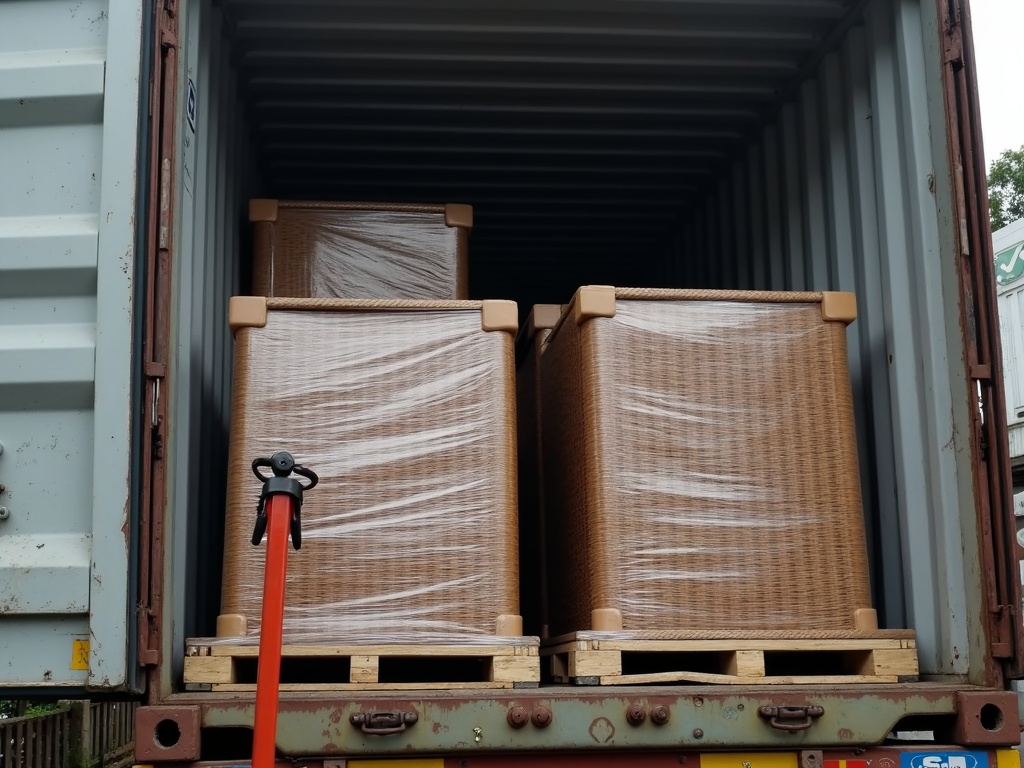
Wrapped rattan furniture loaded into a shipping container.
How Does a Low-MOQ Order Work From Enquiry to Sailing?
What Should First-Time Importers Check Before Paying a Deposit?
-
Material honesty
Natural rattan is an indoor material. For uncovered outdoor use, specify HDPE synthetic weave on aluminum frames. A supplier claiming natural anyaman survives open-air weather year-round is not being straight with you.
-
Frame documentation
If frames are teak, mahogany, or mindi, ask how the SVLK wood-legality document is handled for the wood component. Do not accept a vague "everything is certified."
-
Destination rules
German customs require detailed product descriptions, value declarations, and origin certificates; EU-bound furniture must also meet European flame-retardancy and chemical-content standards. Confirm in writing who prepares what.
-
Quote discipline
Every USD figure anywhere — including on this page — is an indicative example. If a number is not on a dated quotation against your item list, it is not a price.
Ready to Check If Your Order Qualifies?
Send your item list, even a rough one, and get a straight answer: does it cube out, what could a trial order look like, and what is the indicative per-piece range.
Enquiries are handled by the Juara Holding Group export desk, part of Juara Holding Group — an Indonesian group operating from Bali across Indonesia since 2015. One contact carries you from first quote to bill of lading.
Frequently Asked Questions
Read the full FAQThe rest of the export desk
Container maths, minimums and paperwork, one page each.


Send the spec, get a dated quote
Tell us the destination market, the pieces you want and roughly what volume. The desk replies within one business day, Bali hours.