
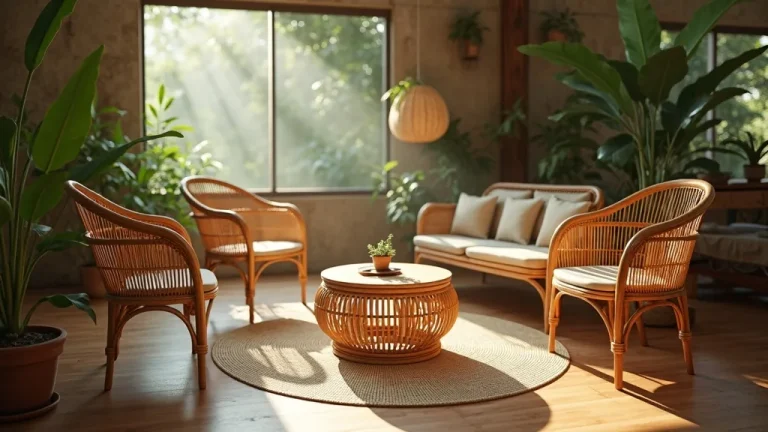
Natural vs Synthetic Rattan: The Real Difference
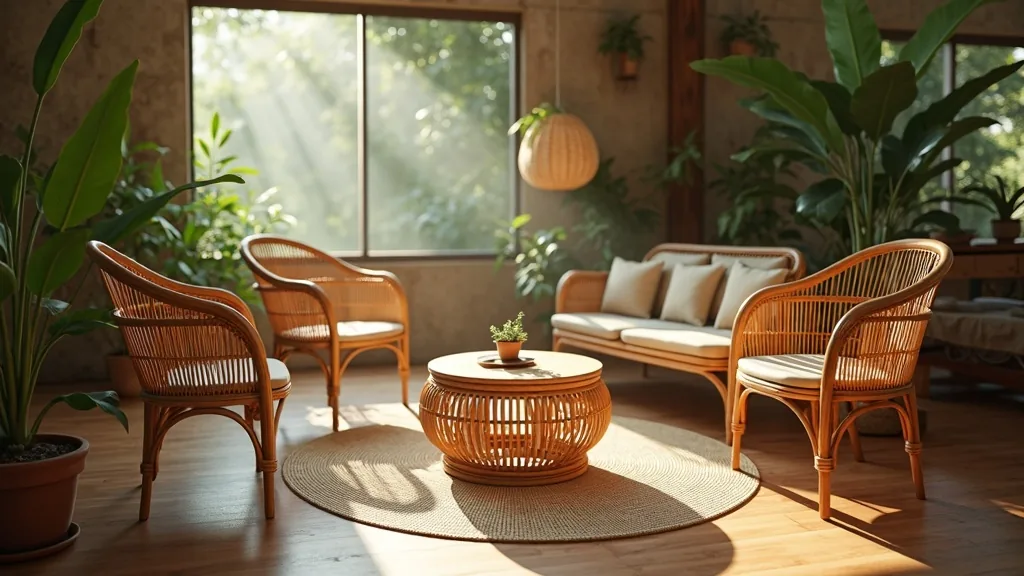
Natural rattan is a climbing forest palm — rotan in Indonesian — harvested, steamed, bent, and hand-woven into furniture. Synthetic rattan is an HDPE or PE strand extruded in a factory to imitate that weave. Natural wins indoors on feel, weight, and warmth. Synthetic wins outdoors, shrugging off the rain and UV that ruin natural cane.
Both come from the same Indonesian supply chain, often the same workshops, and load into the same container. What separates them is material origin, weather behaviour, lifespan, and price logic — covered here from an importer’s point of view.
What Actually Separates Natural Rotan From a Synthetic Strand?
Natural rattan is a vine, not a timber — harvested in Indonesian forests as long poles, then steamed and bent for frames or split into peel for weaving. Under Trade Regulation Permendag No. 38 of 2017, that raw fiber cannot leave Indonesia — only semi-finished rattan and finished furniture can be exported. Then-Trade Minister Enggartiasto Lukita, speaking in Cirebon and reported by ANTARA News, confirmed the split: raw rotan stays, processed forms ship. The weaving — anyaman — happens in clusters like Cirebon in West Java, while Bali handles design-led finishing and export from warehouses around Jimbaran and Denpasar.
Synthetic rattan never grew anywhere. It is high-density polyethylene (HDPE) or PE extruded into flat, half-round, or round strands, then hand-woven over powder-coated aluminium frames. Quality strands are through-dyed and UV-stabilised; cheap PVC imitations are surface-coloured, and the difference shows within one outdoor season as fading and cracking. Most Bali exporters run both lines side by side, which is why importers sourcing through a synthetic rattan furniture wholesale program routinely top up the same container with natural pieces for their indoor range.
How Do Natural and Synthetic Rattan Compare Side by Side?
| Factor | Natural rattan (rotan) | Synthetic rattan (HDPE/PE) |
|---|---|---|
| Material origin | Forest palm vine, solid fibrous core | Extruded polymer strand |
| Look and feel | Warm, organic, small handwork irregularities | Uniform strands, consistent colour batches |
| Weight | Light — one person carries a chair easily | Heavier; aluminium frame adds mass |
| Weather resistance | Poor in rain and UV; indoor or covered use | Strong outdoors when HDPE and UV-stabilised |
| Frame | Rattan pole, or teak/mahogany/mindi wood | Powder-coated aluminium, occasionally steel |
| Lifespan | Decades indoors with basic care | Roughly 5-10+ years outdoors for quality HDPE |
| Cleaning | Dry dusting, occasional light oiling | Hose down with mild soapy water |
| Export paperwork | SVLK applies to any wood frame component | No timber documents for all-aluminium builds |
One compliance detail: since 1 January 2015, SVLK timber-legality verification has been mandatory for Indonesian wood and wood-furniture exports, so a natural rattan chair on a teak or mindi frame ships with SVLK paperwork covering the wood component. An all-aluminium synthetic set skips that requirement.
Which One Survives Outdoors — and Where Does Each Belong?
Honesty first: natural rattan and open weather do not mix. Direct sun dries the fibers until they crack, rain swells and loosens joints, and tropical humidity invites mold on the anyaman. A covered veranda with no rain exposure is its outdoor limit.
Quality synthetic rattan is a different story. Through-dyed, UV-stabilised HDPE strand handles pool decks, rooftop bars, and salt air for years. Budget PE and PVC lookalikes fade, stiffen, and split much sooner, so strand spec belongs in your purchase order, not in a verbal promise.
| Project setting | Better choice | Why |
|---|---|---|
| Hotel lobby, restaurant interior | Natural | Authentic texture guests see and touch |
| Villa or apartment living room | Natural | Light, breathable, warm under AC |
| Pool deck, rooftop bar | Synthetic HDPE | Constant UV, splash, and cleaning cycles |
| Beach club | Synthetic HDPE | Aluminium frames shrug off salt air |
| Covered veranda | Either | Shade and a dry floor suit both |
| Resort suites and spas | Natural | Design-led interiors reward real rotan |
Is Synthetic Rattan Cheaper Than Natural Rattan From Bali?
Per piece, usually not — which surprises many first-time buyers. Natural rotan fiber is local, abundant, and inexpensive at origin; the cost sits in skilled weaving labor. Synthetic pieces carry an aluminium frame plus imported or factory-made polymer strand, both tied to commodity prices. As an indicative example only, as of 2026 and subject to change, workshops in Bali and Cirebon might quote a natural rattan dining chair around USD 45-90 FOB, while a comparable HDPE chair on aluminium lands around USD 60-120. Treat those numbers as illustrations, not offers: real pricing is quoted per piece, per specification, from your item list.
Why Is There No Fixed Price Gap Between the Two Materials?
Because nothing in this trade is standardized. No source verifies an industry-wide MOQ, a standard per-CBM container price, or universal weave-grade codes — every figure is supplier-specific and negotiated. The variables that move a quote include strand or fiber quality, frame material, weave density (tight anyaman takes far more hours than open weave), finish system, cushion spec, and order volume.
For scale, BPS-Statistics Indonesia reports Bali Province exported goods worth US$634,496,917 in 2024, and Indonesia’s rattan furniture exports under HS 94038300 ran about USD 14.6 million that same year, reaching 69 countries and more than 400 buyers. Yet none of those transactions ran off a public price list — each container was specified and negotiated line by line.
How Should You Budget a Mixed Natural and Synthetic Container?
The practical MOQ is a mixed 20ft or 40ft container that cubes out, shipped FOB Semarang or Surabaya. A workable budgeting sequence:
- Split your range by placement — natural for indoor SKUs, HDPE for anything outdoors.
- Specify every item: dimensions, frame material, strand or fiber type, weave pattern, finish, cushion fabric.
- Send the item list for per-piece FOB quotation.
- Run a cube-out check to decide between 20ft and 40ft.
- Add freight, insurance, and destination-side duties and compliance to reach landed cost.
On timing, plan realistically: logistics guides put Bali-to-Germany rattan shipments at 6-10 weeks total including production and packing, while sea freight from Bali to Australia typically runs 2-6 weeks. Paperwork for either material includes a commercial invoice, packing list, bill of lading, certificate of origin, and Indonesian export declaration — plus fumigation certificates and SVLK documents wherever wooden frames are in the load.
Frequently Asked Questions
How can I tell natural from synthetic rattan when inspecting furniture in Bali?
Check the strand ends: natural rotan shows a fibrous, porous core with visible growth nodes, while synthetic strands are sealed, uniform plastic, sometimes with a faint extrusion seam. Natural weave carries small handwork irregularities; synthetic repeats perfectly. Weight is another tell — aluminium-framed synthetic pieces feel noticeably heavier than natural pole-frame furniture of the same size.
Can I combine natural and synthetic rattan furniture in one container from Bali?
Yes, and most wholesale buyers do exactly that. Exporters consolidate both lines into one mixed 20ft or 40ft container that cubes out, shipped FOB Semarang or Surabaya. Keep the natural pieces assigned to indoor placement at destination, and remember that any teak, mahogany, or mindi frames in the load need SVLK paperwork and fumigation certificates.
Does Indonesia’s raw rattan export ban apply to synthetic rattan furniture?
No. Permendag No. 38 of 2017 restricts exports of raw, unprocessed rotan fiber; synthetic rattan is an HDPE or PE polymer and was never in scope. Finished furniture in either material exports freely. The ban matters to price instead — it keeps natural fiber and weaving labor inside Indonesia, which supports competitive quotes on hand-woven natural pieces.
Keep Reading
Uncategorized
Bali Eco Resort Rattan Furniture Sourcing Guide 2027
Eco-resorts opening around 2027 should lock their Bali rattan furniture suppliers by mid-to-late 2026: specify traceable Indonesian rotan — finished…
Uncategorized
Rattan FF&E Investment in Bali Hospitality: 2027
Rattan furniture investment opportunities in Bali hospitality for 2027 are procurement opportunities, not securities: the villas, beach clubs, and eco-resorts…
Uncategorized
RCEP Supply Chains for Bali Rattan Exporters: 2027
For 2027, an RCEP supply chain strategy for Bali rattan exporters comes down to three moves: claim preferential tariffs where…