
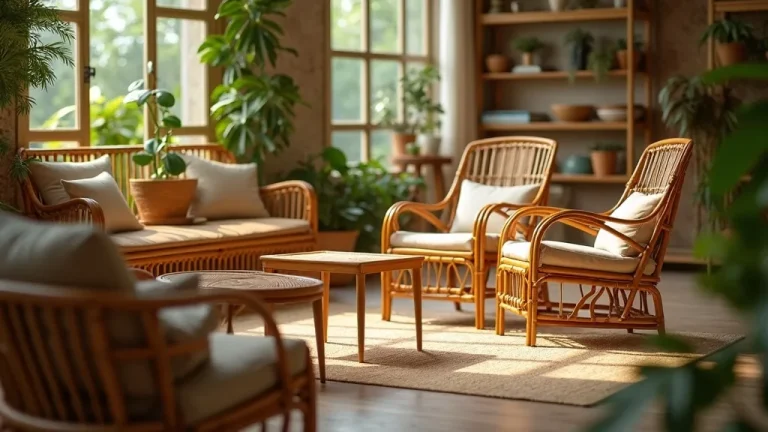
RCEP Supply Chains for Bali Rattan Exporters: 2027
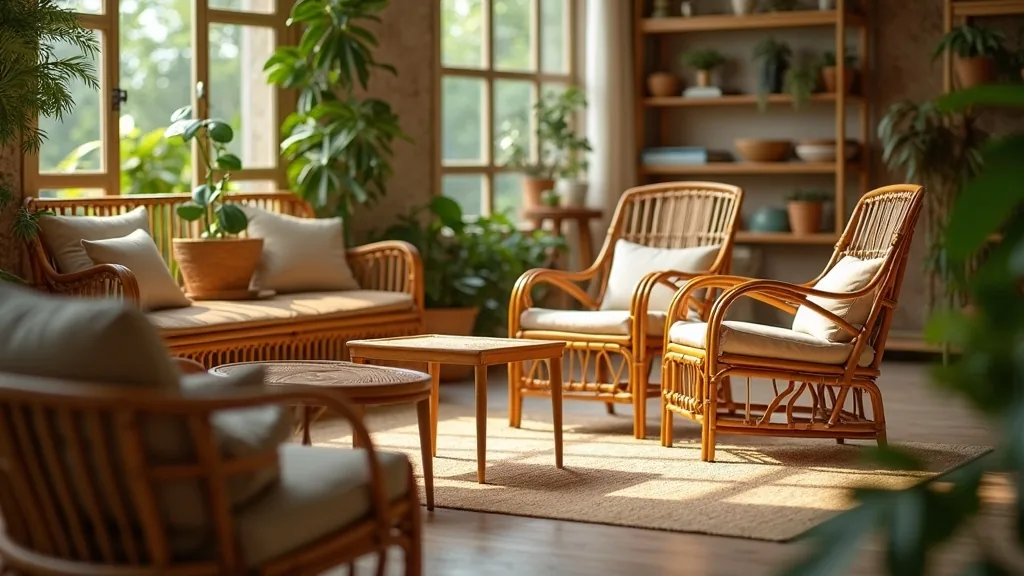
For 2027, an RCEP supply chain strategy for Bali rattan exporters comes down to three moves: claim preferential tariffs where furniture lines have already phased down, use regional cumulation to source fittings and synthetic fiber inside the bloc, and route high-volume woven goods through the agreement first. As of mid-2026, this is an outlook, not a prediction.
What Is RCEP, and Why Does It Matter for Bali Rattan in 2027?
The Regional Comprehensive Economic Partnership is the largest free-trade agreement in force, measured by the combined GDP of its members. It entered into force on 1 January 2022 and, per Indonesia’s Ministry of Trade, took effect for Indonesia on 2 January 2023. Fifteen economies sit inside it: the ten ASEAN states plus China, Japan, South Korea, Australia, and New Zealand.
Two features matter to anyone shipping woven furniture or mebel rotan out of Bali.
First, tariff schedules. RCEP commitments phase down over periods of ten to twenty years depending on the product line and the importing country, so every January moves more furniture codes closer to zero. By 2027 the earliest schedules are six steps into that curve, which is why forward-looking buyers are already re-pricing Asia-Pacific lanes.
Second, cumulation. Under RCEP rules of origin, inputs sourced from any member country count toward the regional value content of the finished product, typically against a 40 percent threshold or a change-in-tariff-heading test. One certificate-of-origin format works across all fifteen markets.
| Group | Members | Relevance for rattan exporters |
|---|---|---|
| ASEAN | Indonesia, Malaysia, Thailand, Vietnam, Philippines, Singapore, Brunei, Cambodia, Laos, Myanmar | Indonesia is the origin economy; regional competitors sit inside the same bloc |
| Northeast Asia | China, Japan, South Korea | Major furniture import markets, plus hardware and synthetic-fiber suppliers |
| Oceania | Australia, New Zealand | Established buyers of Bali outdoor and hospitality furniture |
How Do RCEP Cumulation Rules Work for Woven Furniture?
Here is where Bali’s position is unusual: the core material needs no cumulation at all. Under Trade Regulation Permendag No. 38 of 2017, raw rattan cannot leave Indonesia, while semi-finished rattan and finished furniture can — a policy then-Trade Minister Enggartiasto Lukita defended in Cirebon in remarks reported by ANTARA News. The cane and anyaman in a Bali-made piece are Indonesian by law, so natural-fiber products clear origin tests comfortably.
Cumulation earns its keep on everything around the weave:
- Synthetic fiber. HDPE wicker resin and extruded fiber often come from Chinese or Korean producers. Sourced inside RCEP, that input still counts toward Indonesian origin.
- Frames and hardware. Powder-coated aluminum tube, stainless fittings, and tempered glass from member countries cumulate the same way.
- Cushions and packing. Foam, outdoor fabric, and carton stock follow the same logic.
The practical effect: a Bali workshop can build a synthetic-rattan lounge set with Korean fiber on an Indonesian frame and ship it to Japan or Australia under one RCEP certificate — subject to the product-specific rule for that HS code, which your forwarder should verify before you commit a container.
Why Do High-Volume Woven Goods Like Baskets Benefit First?
Tariff preference compounds with unit count. A percentage point saved on one carved daybed is small money; the same point saved across four thousand nested units in a 40ft container is a real line on the landed-cost sheet. That is why the earliest RCEP gains in this category show up in dense, stackable products — bali rattan baskets, nested storage sets, pendant lampshades, and tray stacks that cube out a container in the thousands of pieces rather than the hundreds.
| Factor | Chairs and loungers | Baskets and nested sets |
|---|---|---|
| Units per 40ft container | Hundreds | Thousands, nested |
| Duty saved per container | Moderate | Multiplied across unit count |
| Origin test | May involve imported frame inputs | Almost entirely Indonesian fiber and labor |
| Documentation effort per unit | Higher | Spread thin across volume |
The base this acts on is already broad. BPS-Statistics Indonesia reports Bali Province exported US$634.5 million in goods in 2024, and by that year Indonesia’s rattan trade reached 69 countries and more than 400 buyers, with rattan furniture under HS 94038300 worth about USD 14.6 million in 2024. Small percentage gains on lanes into Japan, Korea, China, Australia, and New Zealand work across that entire base.
What 2026 Signals Actually Point Toward 2027?
Honesty first: nobody can promise what tariff lines will look like in eighteen months, and Indonesian rattan policy has been politically contested before — an earlier export ban was lifted and then re-evaluated. Treat the following as dated observation, not forecast.
- Tariff staging is running on schedule. Each January brings another phase-down step across members’ schedules; 2027 simply sits deeper into the curve than 2026 does.
- E-certification has matured. Indonesian exporters now file RCEP certificates of origin electronically through the INSW single-window ecosystem, which cuts document turnaround versus paper processing.
- Buyer behavior is shifting. Through 2026, more Asia-Pacific retail and hospitality buyers began asking Bali suppliers for landed-cost quotes with preferential duty applied, not just FOB Semarang or Surabaya figures.
- Demand studies keep pointing up. Multiple market studies forecast global rattan furniture growth through 2030-2033, with Asia-Pacific repeatedly flagged as the fastest-moving region.
How Should Exporters and Buyers Plan 2027 Containers?
A workable planning sequence, whether you buy from Jimbaran and Denpasar export warehouses or contract weaving through the Cirebon cluster:
- Map your HS codes. Woven seating, baskets, and lighting sit under different headings with different staging timetables.
- Pull the product-specific rule. Confirm the regional-value-content or tariff-shift requirement for each code into each target market.
- Audit component origin. List where fiber, frames, fittings, and cushions come from, and whether each cumulates.
- Price both scenarios. Run the container at standard MFN duty and at the preferential rate; the gap is your negotiating room.
- Build the document set early. Commercial invoice, packing list, bill of lading, certificate of origin in RCEP format where preference is claimed, and the Indonesian export declaration — plus fumigation certificates for wooden parts and SVLK timber-legality papers for wood components, mandatory since 1 January 2015.
- Date-stamp every quote. Rates and rules move; a 2026 landed-cost sheet should say so on its face.
Lead time belongs in the same plan. Sea freight from Bali to Australia typically runs two to six weeks, and full production-to-door timelines stretch longer, so 2027 stock decisions are effectively made in late 2026.
Frequently Asked Questions
Does RCEP make Indonesian rattan furniture duty-free across Asia-Pacific in 2027?
No. Tariff commitments phase down line by line over ten-to-twenty-year schedules that differ by importing country and HS code. Some furniture lines already carry zero or low preferential rates; others are still stepping down in 2027. Check the specific code for each destination and price both standard and preferential scenarios before committing a container.
Can a Bali synthetic-rattan set using imported HDPE fiber still claim RCEP preference?
Often, yes — through regional cumulation. Inputs from any RCEP member count toward the regional value content of goods finished in Indonesia, typically measured against a 40 percent threshold or a tariff-shift test. The answer is product-specific, so have your forwarder or customs broker verify the rule for your exact HS code before relying on it.
What paperwork does a Bali exporter need to claim RCEP preference in 2027?
The standard export set — commercial invoice, packing list, bill of lading, and Indonesian export declaration — plus an RCEP-format certificate of origin, filed electronically through Indonesia’s INSW system. Wooden components add fumigation and SVLK timber-legality documents, the latter mandatory since 1 January 2015. As of 2026, destination-side requirements still vary by market, so confirm them early.
Keep Reading
Uncategorized
Bali Eco Resort Rattan Furniture Sourcing Guide 2027
Eco-resorts opening around 2027 should lock their Bali rattan furniture suppliers by mid-to-late 2026: specify traceable Indonesian rotan — finished…
Uncategorized
Rattan FF&E Investment in Bali Hospitality: 2027
Rattan furniture investment opportunities in Bali hospitality for 2027 are procurement opportunities, not securities: the villas, beach clubs, and eco-resorts…
Uncategorized
SVLK & FLEGT Legality for Rattan and Wood Frames
SVLK — Sistem Verifikasi Legalitas Kayu — has been mandatory for Indonesian wood and wood-furniture exports since 1 January 2015,…