
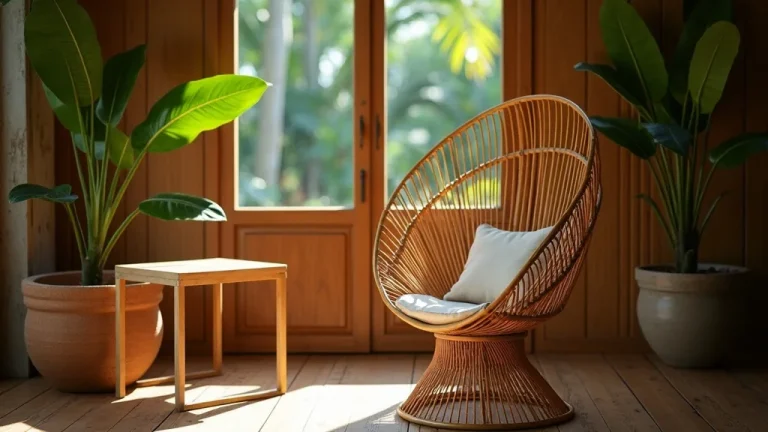
Rattan FF&E Investment in Bali Hospitality: 2027
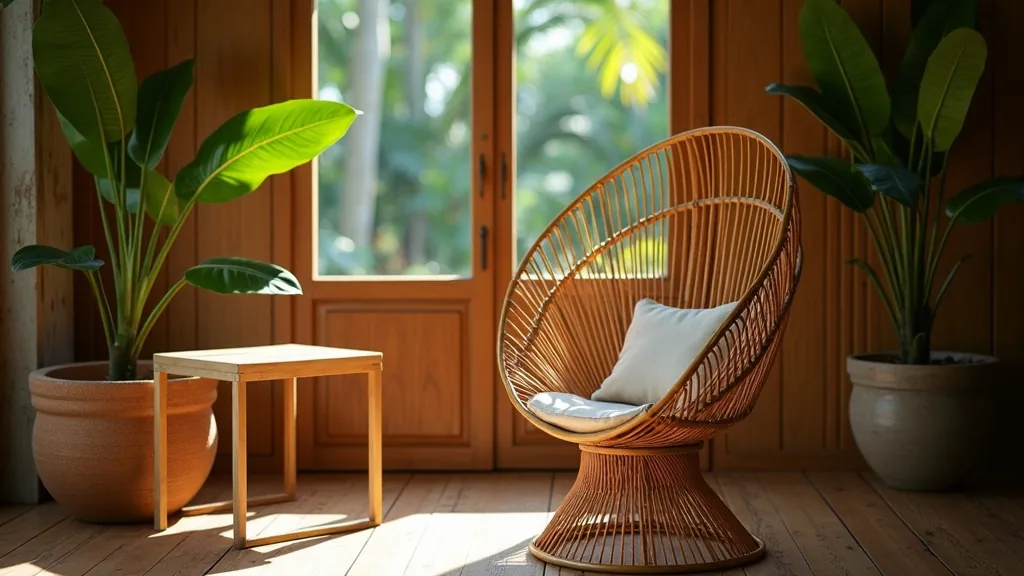
Rattan furniture investment opportunities in Bali hospitality for 2027 are procurement opportunities, not securities: the villas, beach clubs, and eco-resorts opening through 2027 all need contract-grade woven furniture, and Indonesia’s ban on raw rattan exports keeps finished-furniture value on the island. What follows is a market outlook grounded in 2026 signals — not investment advice.
Why does Bali’s build-out point to strong FF&E demand in 2027?
Because rooms keep getting built faster than furniture gets ordered. Through 2026, the visible project pipeline across Canggu, Uluwatu, Ubud, and the Bukit — villa estates, beach clubs, wellness retreats, eco-resorts — has stayed dense, and every one of those properties needs an FF&E package (furniture, fixtures, and equipment) before it can take a single booking.
The economic base underneath is real. BPS-Statistics Indonesia reports that Bali Province exported goods worth US$634,496,917 in 2024, and mebel — furniture — is one of the island’s signature value-added categories. Most large-scale suppliers and export warehouses cluster in Jimbaran and Denpasar, which is exactly where hospitality projects that source complete furniture packages begin their search for rattan furniture for hotels.
For a 2027 opening, the FF&E decision actually lands in 2026. Sea freight, production queues, and customs paperwork mean the woven furniture in a January 2027 lobby was usually quoted the year before.
Where will the rattan demand actually come from?
Three property types dominate the 2027 pipeline, and each pulls different anyaman (weave) work:
| Property type | Typical rattan FF&E | Why rattan fits |
|---|---|---|
| Private villa estates | Bed heads, lounge chairs, pendant shades, mirrors | Natural texture photographs well; guests book on interiors |
| Beach clubs | Synthetic-weave daybeds, bar stools, cabana sets | HDPE weave survives sun, salt, and 12-hour daily use |
| Eco-resorts and retreats | Natural rotan dining sets, room dividers, daybeds | Fast-renewing fiber supports the sustainability story guests pay for |
| Boutique hotels | Mixed natural-indoor and synthetic-outdoor packages | One supplier, one container, one design language |
Notice the split. Natural rattan is an indoor material: beautiful and quick to regrow, but it degrades in direct rain and UV. Synthetic rattan — HDPE or PE fiber woven over powder-coated aluminum — is the honest choice for pool decks and beachfront. A credible 2027 FF&E plan uses both, and a supplier who claims natural rotan will thrive outdoors uncovered is telling you something about their other claims too.
What makes finished Bali rattan a structural story, not a trend?
Regulation. Under Trade Regulation Permendag No. 38 of 2017, raw (unprocessed) rattan may not be exported from Indonesia, while semi-finished rattan and finished rattan furniture can be. Then-Trade Minister Enggartiasto Lukita, speaking in Cirebon and reported by ANTARA News, Indonesia’s state news agency, put it plainly: raw rattan cannot leave the country, but the semi-finished product is allowed out.
The effect is that weaving and finishing — the value-added steps — stay inside Indonesia. Cirebon in West Java remains the historic weaving cluster, the Pasuruan–Sidoarjo corridor is another active furniture zone, and Bali works as the design-led finishing and ekspor hub. A hotel buying finished Bali rattan in 2027 is buying at the exact point where the regulation concentrates skill and capacity.
One honest caveat: rattan export policy has been politically contested before — an earlier ban was lifted and then re-evaluated — so treat the current framework as the rule as of 2026, not a permanent guarantee.
How does durability drive the ROI logic for contract-grade pieces?
Hospitality furniture earns its keep through replacement cycles, not sticker price. A cheap chair replaced every 18 months costs more over five years than a contract-grade chair that runs five seasons.
| Factor | Retail-grade import | Contract-grade Bali rattan |
|---|---|---|
| Frame | Thin steel or stapled softwood | Kiln-dried hardwood or welded aluminum |
| Weave | Loose machine weave | Hand-woven anyaman, tensioned and tacked |
| Outdoor life | Often one to two seasons | HDPE fiber engineered for UV and salt air |
| End of life | Discard and reorder | Re-weavable by the same workshops |
On numbers, be careful with anyone quoting fixed prices. As of 2026, and as indicative examples only: a hand-woven lounge chair might be quoted in the USD 90–180 FOB range and a synthetic-weave daybed in the USD 250–450 range, depending on frame, weave density, and finish. Every real figure is quote-based per piece and per spec, priced from your item list by workshops in Bali and Cirebon. No published “standard” per-piece or per-CBM price exists for this category, and figures change.
The general ROI frame is simple and makes no promises: longer service life plus local re-weaving capacity lowers lifetime FF&E cost per room. Whether that beats any other use of a project’s capital depends on the project — that judgment belongs to you and your own advisers, not a furniture supplier.
What do 2026 trade signals suggest about 2027?
The export base is modest but unusually broad. Indonesia’s rattan furniture exports under HS code 94038300 ran about USD 14.6 million in 2024, and by that year the country’s rattan trade served 69 countries with more than 400 active buyers. Multiple market studies project global rattan furniture growth through 2030–2033, driven in part by hospitality demand for natural materials.
Read all of that as an outlook, not a prediction. Small category, wide buyer spread, a regulatory moat, forecast growth: those are the dated signals pointing into 2027. None of them guarantees an outcome, and this page does not offer one.
How should a 2027 opening structure its rattan order?
Work backward from the soft-opening date:
- Two to three quarters out — lock specifications. Dimensions, weave pattern, finish, cushion fabric. Workshops routinely adjust dimensions, colors, and finishes to buyer drawings; send diagrams or photos so nothing gets lost in translation.
- Sampling. Approve one physical sample per SKU before production starts. Budget two to four weeks.
- Production and shipping. Bali-to-Germany shipments typically run 6–10 weeks in total including production and packing, per logistics-guide figures; sea freight from Bali to Australia alone usually takes 2–6 weeks. Air freight exists but rarely pencils out for bulky woven furniture.
- Container math. MOQ in this trade is best framed as a mixed 20ft or 40ft container that cubes out — daybeds, chairs, and pendant lighting packed together to fill the box. FOB port is typically Semarang or Surabaya.
- Paperwork. Commercial invoice, packing list, bill of lading, certificate of origin, and the Indonesian export declaration. Wooden components need fumigation certificates, and since 1 January 2015 SVLK timber-legality verification has covered the wood-frame element of mixed pieces. EU-bound orders add flame-retardancy and chemical-content requirements.
Hit those five steps during 2026 and the container lands well before your 2027 photographer does.
Frequently Asked Questions
Is 2027 a realistic year to budget rattan FF&E for a Bali hospitality project?
Yes, provided procurement starts in 2026. Production plus sea freight runs roughly 6–10 weeks to Europe and 2–6 weeks to Australia, and sampling adds two to four weeks before that. Budget from quotes, not published lists: as of 2026 every figure is quote-based per piece and spec, and this outlook is market framing, not investment advice.
Will Indonesia’s raw rattan export ban still shape the market in 2027?
As of 2026, Permendag No. 38 of 2017 still blocks raw rattan exports while allowing semi-finished and finished furniture out, which keeps weaving value inside Indonesia. The policy has been contested and revised in the past, so verify the current rule when you place a 2027 order; no supplier can honestly promise regulatory permanence.
Should a 2027 beach club specify natural or synthetic rattan?
Synthetic for anything uncovered. HDPE weave over powder-coated aluminum handles UV, rain, and salt air; natural rotan is an indoor and covered-terrace material that breaks down outdoors. Most beach clubs planning 2027 openings order a mixed container — natural anyaman inside, synthetic poolside — so one supplier delivers a single consistent design language.
Keep Reading
Uncategorized
Bali Eco Resort Rattan Furniture Sourcing Guide 2027
Eco-resorts opening around 2027 should lock their Bali rattan furniture suppliers by mid-to-late 2026: specify traceable Indonesian rotan — finished…
Uncategorized
RCEP Supply Chains for Bali Rattan Exporters: 2027
For 2027, an RCEP supply chain strategy for Bali rattan exporters comes down to three moves: claim preferential tariffs where…
Uncategorized
SVLK & FLEGT Legality for Rattan and Wood Frames
SVLK — Sistem Verifikasi Legalitas Kayu — has been mandatory for Indonesian wood and wood-furniture exports since 1 January 2015,…