

Container Loading for Modular Rattan Lounge Sets
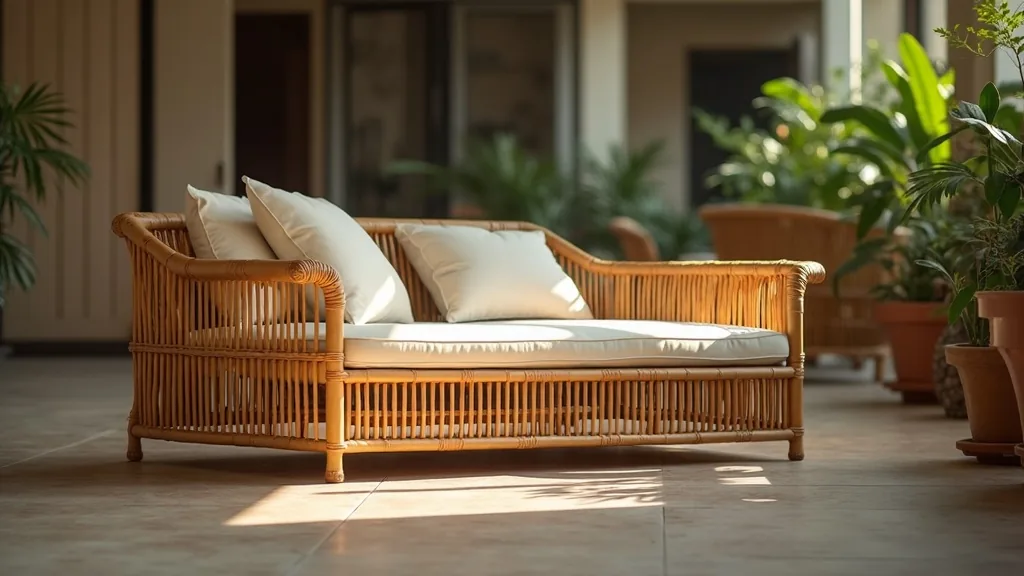
Container loading efficiency for modular rattan lounge sets in 2027 comes down to one metric: shipped CBM per seat. Knock-down frames, stackable modules, and nesting corner units can cut shipped volume by a quarter or more versus assembled sets — supplier-specific, never guaranteed — so buyers should demand a loading plan, stuffing photos, and per-CBM freight math before confirming any order.
Why Does Loading Efficiency Matter More for 2027 Orders?
Because freight is the swing cost, not the furniture. Through 2026, ocean freight pricing out of Indonesian ports stayed volatile enough that an identical lounge set could land at noticeably different costs from one quarter to the next. A buyer cannot control the rate. What a buyer can control is how many sellable seats travel inside each cubic metre already paid for.
The demand side keeps the pressure on. BPS-Statistics Indonesia reports that Bali Province exported goods worth US$634,496,917 in 2024, and Indonesia’s rattan furniture exports under HS code 94038300 came to roughly USD 14.6 million that same year, with the country’s rattan trade reaching 69 countries and more than 400 buyers by 2024. Multiple market studies forecast global rattan furniture growth through 2030-2033. More buyers competing for the same container space is precisely the environment where loading discipline pays for itself.
Modular lounge sets concentrate the problem. A five-piece sectional shipped fully assembled is mostly air: seat voids, arm overhangs, and footprints that refuse to tessellate. Loading efficiency decides whether a pilot order genuinely fills a 20ft rattan container — roughly 26-28 usable CBM in real stuffing practice — or forces a premature jump to a 40ft with paid-for empty space above the cargo.
One framing note before the detail. This piece is an outlook grounded in what we saw through 2026, not a prediction. Freight rates, regulations, and workshop practice all move. Every figure below is an indicative example as of 2026, subject to change, and real pricing is always quote-based per piece and per specification from your item list.
Which Design Features Actually Cut Shipped CBM?
The 2026 sampling season made one shift obvious in Bali and Cirebon workshops: buyers stopped asking only “how does it look?” and started asking “how does it pack?” The features below are the ones worth specifying at the drawing stage — most artisans will happily adjust dimensions and construction to a buyer’s diagram, which is exactly why you should send one.
| Design feature | How it saves volume | Indicative effect (as of 2026, subject to change) |
|---|---|---|
| Knock-down (lepas-pasang) bolted frame | Base, back, and arms ship flat in one carton | Often the single largest saving on deep lounge modules |
| Stackable base modules | Identical seat units nest three to five high | Turns dead vertical space into billable product |
| Nesting corner and ottoman units | Smaller pieces travel inside larger footprints | Fills voids that would otherwise ship as air |
| Removable legs | Cuts carton height on every module | Small per piece, large across a full container |
| Compressed cushion cartons | Cushions vacuum-packed separately from frames | Frees frame cartons to stack tighter |
| Common-width module family | One carton footprint across the whole range | Simplifies the stuffing plan and reduces bracing |
None of these percentages are standardised across the industry — no source verifies a universal CBM figure per design, which is why the honest posture is to price from a per-SKU carton dimension list rather than a brochure claim.
What Loading Evidence Should Buyers Request in 2027?
Ask for documents, not assurances. A workshop that packs well can prove it on paper and in photos. For a modular lounge order, request the following, in this sequence:
- Draft stuffing plan at quotation stage — a per-container layout showing each SKU, its carton dimensions, carton count, and running CBM total. This is what turns “MOQ is a mixed container that cubes out” into an actual drawing.
- Carton dimension list per SKU — length, width, height, and gross weight for every module, cushion carton, and hardware pack.
- Stuffing photo report at load-out — empty container interior, mid-load, and a door shot showing the final tier plus the seal being applied.
- Tally sheet — the packing list reconciled against what physically entered the container, signed at origin.
- Seal number carried onto the bill of lading — so the photos, the tally, and the shipping document all reference one sealed box leaving FOB Semarang or Surabaya.
Since 1 January 2015, SVLK timber-legality documentation has been mandatory for wood-furniture exports from Indonesia, so if your modular frames use teak or mindi rather than rattan pole and aluminium, the loading file should sit alongside the SVLK paperwork, fumigation certificate, invoice, packing list, and certificate of origin as one coherent export set.
How Does Saved CBM Change Per-Piece Freight Cost?
Simple division, but it changes negotiations. The arithmetic below is an indicative example only, as of 2026 and subject to change — actual freight moves weekly and actual carton sizes are supplier-specific.
| Scenario (40ft HC, ~68 usable CBM) | Sets loaded | Freight per set at an example USD 4,000 box rate |
|---|---|---|
| Assembled 5-piece lounge sets | ~22 sets | ~USD 182 |
| Knock-down frames, compressed cushions | ~34 sets | ~USD 118 |
| Knock-down plus nesting corners and stackable bases | ~40 sets | ~USD 100 |
The furniture price did not move; the freight per sellable set fell by nearly half. That gap is why 2027 range planning increasingly starts with the carton, not the silhouette. It also compounds downstream: Bali-to-Germany shipments typically run 6-10 weeks door to door including production and packing, and sea freight from Bali to Australia usually takes 2-6 weeks, so fewer containers per season also means fewer lead-time windows to manage.
Which 2026 Signals Point Toward 2027 — and What Stays Uncertain?
The structural signal is regulatory. Under Trade Regulation Permendag No. 38 of 2017, raw rattan may not be exported from Indonesia, while semi-finished rattan and finished rattan furniture can be. Then-Trade Minister Enggartiasto Lukita, speaking in Cirebon and reported by ANTARA News, confirmed that raw rattan cannot leave the country but semi-finished material may. That policy keeps the weaving (anyaman) and finishing value chain inside Indonesia — which is why knock-down engineering is being solved in the same Cirebon and Bali workshops that weave the product, rather than at an assembly plant abroad. Rattan export policy has been politically contested before, so date-stamp that advantage rather than treating it as permanent.
The commercial signal is behavioural. Through 2026, more wholesale enquiries specified packed dimensions in the first message, and more workshops answered with stuffing plans instead of glamour shots. Our honest read for 2027: expect flat-pack modular ranges to become the default wholesale format for lounge sets, expect loading documentation to become a standard pre-order request, and treat any supplier who resists sharing carton data as a risk flag. That is an outlook, not a prediction — freight markets have embarrassed forecasters every year this decade.
Frequently Asked Questions
How much volume can knock-down modular lounge sets save compared with assembled sets?
There is no standard figure — savings depend on frame design, module count, and packing method, and are supplier-specific. Indicatively, knock-down and stackable designs shipped from Bali and Cirebon workshops in 2026 saved anywhere from a fifth to two-fifths of assembled volume. Ask each supplier for a per-SKU carton dimension list and verify the math yourself.
When should I request the container loading plan for a 2027 modular lounge order?
Twice. First at quotation stage, as a draft stuffing plan showing how your item list cubes out in a 20ft or 40ft — this is what makes the mixed-container MOQ concrete. Second, a final loading plan with stuffing photos and the seal number at load-out, so the documents match the bill of lading before the container sails from Semarang or Surabaya.
Do flat-packed modular rattan modules need different packing than assembled sets?
Yes. Knock-down modules travel with hardware bags, numbered assembly diagrams, and corner protection on every anyaman (weave) edge, because stacked cartons press directly on the weave. Cushions usually ship compressed in separate cartons. Specify single-wall versus double-wall carton grade in writing, and for natural rattan confirm desiccant use — sea humidity between Indonesia and Europe is a six-to-ten-week exposure.
Keep Reading

Uncategorized
Bali Eco Resort Rattan Furniture Sourcing Guide 2027
Eco-resorts opening around 2027 should lock their Bali rattan furniture suppliers by mid-to-late 2026: specify traceable Indonesian rotan — finished…

Uncategorized
Rattan FF&E Investment in Bali Hospitality: 2027
Rattan furniture investment opportunities in Bali hospitality for 2027 are procurement opportunities, not securities: the villas, beach clubs, and eco-resorts…

Uncategorized
RCEP Supply Chains for Bali Rattan Exporters: 2027
For 2027, an RCEP supply chain strategy for Bali rattan exporters comes down to three moves: claim preferential tariffs where…