
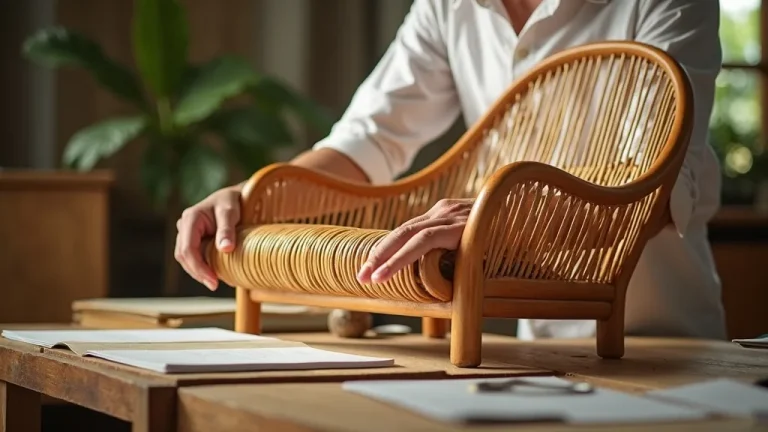
Arranging Mixed Container Shipments From Bali
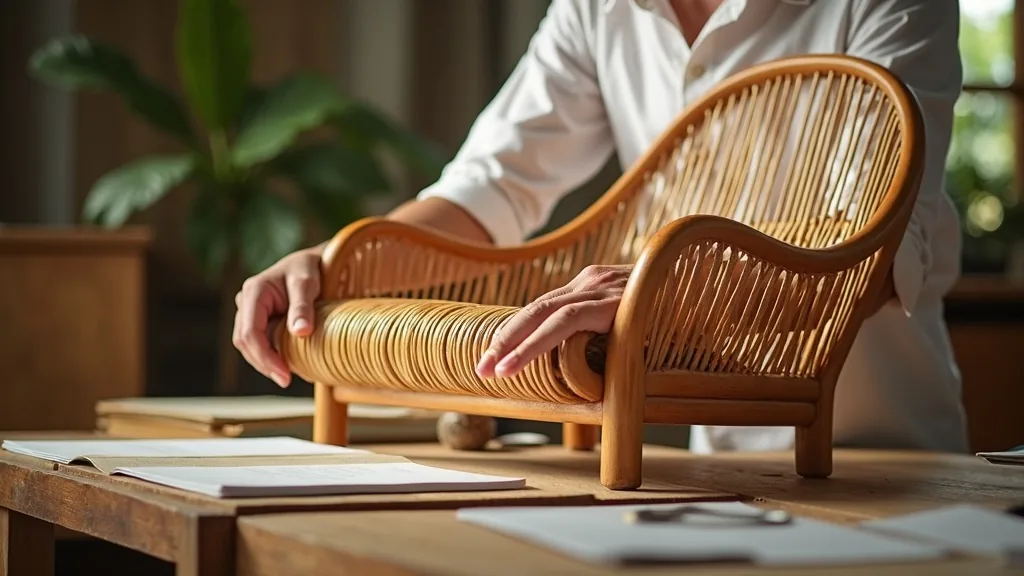
To arrange a mixed container shipment from Bali furniture exporters, build one consolidated item list — furniture, baskets, and decor together — send it for per-piece quotation, agree a load plan that cube-outs a 20ft or 40ft container, and let the exporter consolidate everything under a single bill of lading from Semarang or Surabaya.
That single-list approach is how most first containers out of Bali are booked. By 2024, Indonesia’s rattan trade served 69 countries with more than 400 active buyers, and many of those orders left as muat campur — mixed loads — rather than single-product containers. Here is the full sequence, from item list to loaded box.
Why Do Bali Exporters Prefer Mixed Loads Over Single-SKU Orders?
Because the economics of the box beat the economics of the product. A container costs roughly the same to move whether it carries one SKU or thirty, so exporters set their minimum not as “200 chairs” but as “a container that cube-outs.” Filling every cubic meter with a blend of framed mebel, woven anyaman baskets, and lightweight decor is the fastest route to that threshold — which is exactly the model behind mixed container wholesale programs run from export warehouses in Jimbaran and Denpasar.
There is also a structural reason Bali ships finished goods rather than raw fiber. Under Trade Regulation Permendag No. 38 of 2017, raw rattan may not be exported from Indonesia, while semi-finished rattan and finished rattan furniture can. Then-Trade Minister Enggartiasto Lukita, speaking in Cirebon and reported by ANTARA News, confirmed that raw rattan cannot leave the country but processed forms may. Weaving and finishing therefore stay onshore. Rattan policy has shifted before, so treat this as the position as of 2026, not a permanent guarantee.
The trade behind those boxes is real money. BPS-Statistics Indonesia reports Bali Province exported goods worth US$634,496,917 in 2024, and Indonesia’s rattan furniture exports under HS 94038300 alone came to roughly USD 14.6 million that same year.
How Many SKUs Can One Container Actually Hold?
No published standard governs SKU counts per container — the ranges below reflect working practice among workshops in Bali and Cirebon as of 2026, and your specific mix will move the numbers.
| Container | Usable volume (approx.) | Practical SKU range | Typical mixed load |
|---|---|---|---|
| 20ft | 26–28 CBM | 8–15 SKUs | Dining set, 2–3 seating lines, nested baskets, mirrors |
| 40ft | 54–58 CBM | 15–30 SKUs | Full living + dining program plus decor fillers |
| 40ft high cube | 60–66 CBM | 20–40 SKUs | Retail assortment: furniture, lighting, basketry, wall decor |
Three practical ceilings cap how far you can push SKU variety:
- QC time. Every additional SKU is another inspection line before stuffing; past roughly 30–40 SKUs, loading days stretch and error rates climb.
- Carton logic. One-off pieces that cannot stack or nest waste more volume than they add in assortment value.
- Paperwork lines. Each SKU is a line on the invoice and packing list; sloppy line items are what customs pulls for inspection.
A useful discipline: group your wishlist into families — seating, tables, storage, basketry, decor — and let the exporter say which families share carton formats and stack together.
How Do You Sequence the Load Plan?
Container stuffing in Bali follows a weight-and-void logic, planned on paper before the truck arrives. The standard sequence:
- Heavy framed pieces go in first and low. Dining tables, cabinets, and sofa frames sit at floor level, weight spread evenly front to back for stability at sea.
- Mid-weight seating stacks on and around the frames. Armchairs and dining chairs stack seat-to-seat or nest where the design allows, layers separated by cardboard or foam.
- Knock-down and flat-packed items stand vertical along the walls, bracing the load and using space stacked furniture cannot.
- Baskets and anyaman decor fill every remaining void. Nested basket sets — five or seven sizes inside one another — are the classic void-filler, recovering volume that would otherwise ship as air.
- Fragile finished goods ride on top. Lighting, mirrors, and glass-topped items go in double-walled cartons on the final layer, never under load.
Ask for the load plan document before stuffing day. A proper one lists every SKU with carton dimensions, CBM, position in the box, and a running volume total — how you verify the container genuinely cube-outs instead of shipping air.
What Paperwork Does a Mixed Load Need?
A mixed container clears on the same core document set as any furniture shipment, but every document must itemize the mix accurately.
| Document | Role in a mixed load |
|---|---|
| Commercial invoice | Every SKU line-itemized with its own HS code — furniture and basketry classify under different headings |
| Packing list | Per-carton detail: contents, dimensions, weight; the single most scrutinized document on mixed loads |
| Bill of lading | One B/L covers the whole box, FOB Semarang or Surabaya |
| Certificate of origin | Required by most destinations; German customs specifically expects country-of-origin certificates and detailed product descriptions |
| PEB (export declaration) | Indonesia’s Pemberitahuan Ekspor Barang, filed by the exporter |
| Fumigation certificate | Required for wooden furniture and wood-component pieces |
| Phytosanitary certificate | Applies to plant-based and wooden items depending on destination rules |
| SVLK documentation | Mandatory since 1 January 2015 for the wood components — teak, mahogany, or mindi frames — in the load |
EU-bound mixes carry extra weight: furniture must meet European safety standards, including flame-retardancy and chemical-content restrictions, plus EU plant-health regulations. Flag the destination country on your item list from day one so compliance is built into the quote, not discovered at port.
How Long Does a Mixed Shipment Take, and What Does It Cost?
Logistics guides covering the Bali–Germany lane put a typical rattan furniture shipment at 6–10 weeks total, including production, packaging, and sea freight. Bali to Australia usually runs 2–6 weeks on the water. Air freight is rarely economical for bulky woven furniture — volumetric weight kills it.
On price: there is no standard per-CBM or per-piece rate for Bali rattan. Pricing is quote-based, built line by line from your item list, because weave grade, frame material, and carton efficiency differ per piece. As an indicative example only — as of 2026, subject to change — a natural-rattan lounge chair from workshops in Bali or Cirebon might quote between USD 60 and USD 140 FOB depending on weave density and frame; your quotation replaces every number here.
How Do You Start a Mixed Container Quote?
Send a single spreadsheet: SKU or reference photo, quantity, preferred material (natural rotan or synthetic HDPE weave), finish, and destination port. The export desk prices each line, drafts a load plan against 20ft and 40ft volumes, and shows where filler SKUs — basket sets, mirrors, small decor — close the gap to a full cube-out. From confirmed order to sailing, everything moves under one file, one container, one bill of lading.
Frequently Asked Questions
Can I combine pieces from several different Bali workshops in one container?
Yes — consolidation is routine. Most export warehouses in Jimbaran and Denpasar accept goods from multiple workshops, inspect each delivery, then stuff everything into one container under a single export declaration and bill of lading. You need one coordinating exporter to own the paperwork and the load plan; customs treats the box as one shipment, not several.
How does customs classify a container that mixes furniture, baskets, and decor?
Each product line is declared under its own HS code on one commercial invoice — rattan furniture typically falls under heading 9403 (Indonesia’s rattan furniture exports are tracked under HS 94038300), while basketry sits in Chapter 46. Destination customs then applies duty line by line. A clean, itemized packing list is what keeps a mixed declaration moving through inspection.
What happens if my order list doesn’t fill the container completely?
You have three options: top up with fast-turnaround filler SKUs such as nested basket sets or mirrors, ship the balance as LCL groupage at a higher per-cubic-meter cost, or accept the dead space and pay to ship air. Most exporters propose filler items from current stock first — usually the cheapest fix per cubic meter.
Keep Reading

Uncategorized
Bali Eco Resort Rattan Furniture Sourcing Guide 2027
Eco-resorts opening around 2027 should lock their Bali rattan furniture suppliers by mid-to-late 2026: specify traceable Indonesian rotan — finished…

Uncategorized
Rattan FF&E Investment in Bali Hospitality: 2027
Rattan furniture investment opportunities in Bali hospitality for 2027 are procurement opportunities, not securities: the villas, beach clubs, and eco-resorts…

Uncategorized
RCEP Supply Chains for Bali Rattan Exporters: 2027
For 2027, an RCEP supply chain strategy for Bali rattan exporters comes down to three moves: claim preferential tariffs where…