
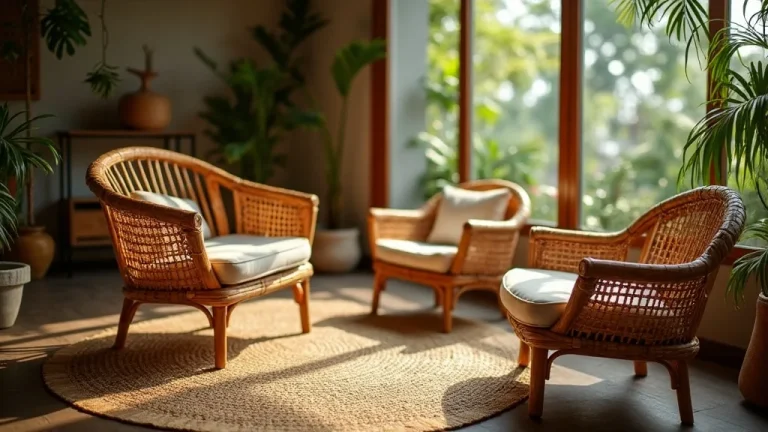
Indonesia Rattan Wholesale Forecast 2027
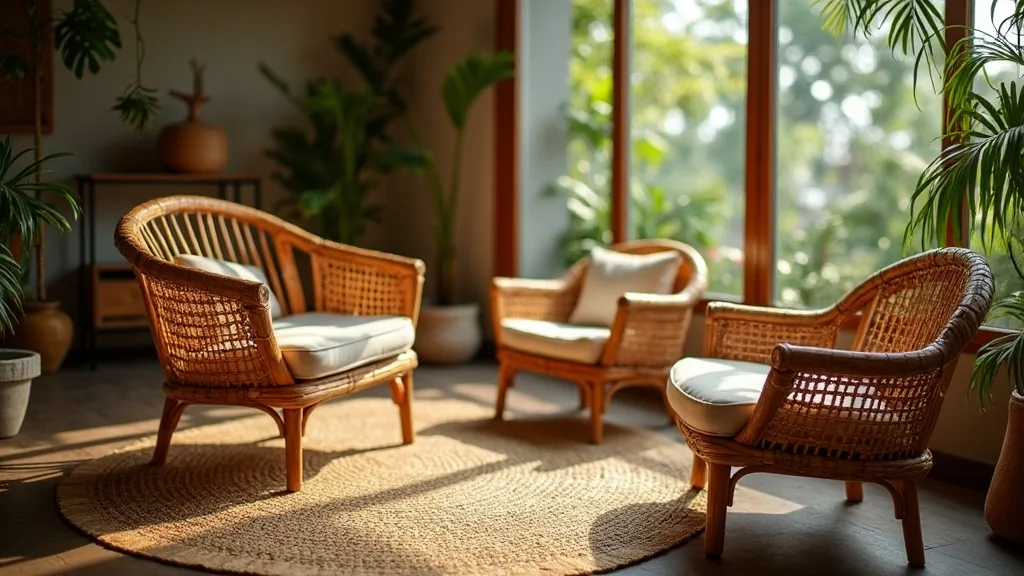
The honest Indonesia rattan furniture wholesale forecast for 2027 is steady growth, not a boom. Market studies project global rattan furniture value rising through 2030-2033, Indonesia’s HS 94038300 exports stood near USD 14.6 million in 2024, and the raw-rattan export ban keeps finished-furniture value onshore. Buyers locking 2027 supply should plan around quote-based pricing, not fixed rates.
Call this what it is: an outlook assembled from dated 2026 signals, not a prediction. Nobody publishes a dependable single number for what Indonesian rattan wholesale will do in 2027. What does exist is a set of verifiable anchors — trade figures, a regulatory moat, and shipping realities — that tell importers which way the current is running and when to commit.
What Data Does a 2027 Forecast Actually Rest On?
Every serious outlook starts by separating what is measured from what is projected. Here is the measured part, each figure with its date attached.
| 2026 signal | Figure | Source and date |
|---|---|---|
| Indonesia rattan furniture exports (HS 94038300) | About USD 14.6 million | Full-year 2024 trade records |
| Bali Province total goods exports | US$634,496,917 | BPS-Statistics Indonesia, 2024 |
| Reach of Indonesia’s rattan trade | 69 countries, 400+ active buyers | Industry trade data through 2024 |
| Global rattan furniture market direction | Value growth projected through 2030-2033 | Multiple market studies, 2024-2026 editions |
| Raw rattan export status | Banned; finished furniture may ship | Permendag No. 38 of 2017, in force as of 2026 |
Two caveats keep this honest. First, HS 94038300 captures only a slice of the trade — rattan pieces built on teak, mahogany, or metal frames often classify under other furniture codes, so the USD 14.6 million baseline is conservative. Second, the market studies pointing at 2030-2033 disagree on exact growth rates depending on publisher, which is exactly why this piece treats them as directional rather than gospel.
Why Does the Raw-Rattan Ban Anchor Any 2027 Outlook?
Because it decides where the margin lives. Under Trade Regulation Permendag No. 38 of 2017, raw unprocessed rattan may not leave Indonesia, while semi-finished rattan and finished rattan furniture can. Then-Trade Minister Enggartiasto Lukita, speaking in Cirebon and reported by ANTARA News, Indonesia’s state news agency, confirmed that raw rattan stays home while the semi-finished material is allowed out.
The structural result: weaving and finishing value stays inside Indonesia. Cirebon in West Java remains the historic anyaman (weaving) cluster, the Pasuruan-Sidoarjo corridor runs a second furniture zone, and Bali — with export warehouses concentrated in Jimbaran and Denpasar — handles design-led finishing and consolidation. Factories elsewhere in Asia cannot legally buy Indonesian raw cane, which is why importers comparing quotes usually benchmark a bulk rattan supplier in bali against overseas workshops working with non-Indonesian fiber or synthetic weave.
One hedge belongs here: rattan export policy has been politically contested before — a prior ban was once lifted and re-evaluated. As of 2026 the regulation stands, but a 2027 planner should date-check it, not assume permanence.
Which 2026 Signals Point Toward 2027 Demand?
Five threads, visible now, that a 2027 buyer should watch:
- Buyer diversification keeps widening. By 2024 Indonesia’s rattan trade already served 69 countries with more than 400 buyers. Demand spread across many markets is more resilient than demand concentrated in one — good news for supply continuity into 2027.
- The natural-versus-synthetic split is hardening. Outdoor and poolside programs increasingly specify HDPE or PE synthetic weave for weather resistance, while natural rotan holds the indoor and hospitality-interior segments. Expect 2027 mixed containers to carry both.
- EU compliance is tightening, not loosening. SVLK timber-legality verification has been mandatory for wood and wood-furniture exports since 1 January 2015, covering teak, mahogany, or mindi frames. Wood-framed pieces may also fall within EUDR scope, and German customs already require detailed product descriptions, value declarations, and origin certificates. Buyers who prepare documents early ship on time.
- Lead times reward early commitment. Logistics guides put Bali-to-Germany shipments at roughly 6-10 weeks including production, packing, and sea freight; Bali-to-Australia sea freight runs 2-6 weeks. Air freight rarely pencils out for bulky woven furniture.
- Customization capacity is real and verified. Bali furniture guides confirm most artisans will adjust dimensions, finishes, and colors to buyer specification — the foundation for OEM and private-label programs heading into 2027.
What Should Wholesale Buyers Do Differently in 2027?
Growth on paper only becomes margin in your warehouse if the calendar is respected. A workable sequence:
| Window | Action | Why it matters |
|---|---|---|
| Q3-Q4 2026 | Shortlist workshops, run sampling and revision rounds | Samples plus corrections consume weeks before any purchase order |
| Q1 2027 | Confirm the first mixed 20ft or 40ft container that cube-outs | Production slots fill ahead of Northern Hemisphere spring resets |
| Q2 2027 | Review landed cost and rebalance the natural-versus-synthetic mix | Early-season sell-through shows which weaves actually move |
| Q3 2027 | Negotiate a rolling 2028 production schedule | Repeat multi-container commitments earn priority scheduling — not fixed prices |
On pricing, keep expectations calibrated. No source verifies a standard industry MOQ, a standard price per CBM, or fixed per-piece rates for Bali rattan furniture — those numbers are supplier-specific and negotiated. Every USD figure you see in 2026, including on this site, is an indicative example subject to change; real quotations are built per piece and per specification from your item list, shipped FOB Semarang or Surabaya.
Where Could This Outlook Go Wrong?
An honest forecast names its failure modes. Four stand out. Policy risk: the raw-rattan ban has shifted before and could shift again, changing the competitive math overnight. Freight risk: the 6-10 week Bali-to-Europe window assumes normal sea-freight conditions; disruptions stretch it. Supply risk: harvest volumes and weaving labor in Cirebon and Bali are finite, and a demand spike tightens slots fast. Forecast risk: the 2030-2033 market studies diverge on growth rates, so any 2027 revenue model built on a single CAGR is fragile. None of these cancel the outlook — they define its error bars.
How Do You Secure Multi-Year Supply Before 2027?
Not with a guaranteed fixed-price contract — no credible workshop in Bali or Cirebon signs one, and any supplier promising 2027 prices in 2026 is telling you what you want to hear. The durable route is procedural: start with one mixed container that cube-outs, send diagrams and photos so the maker fully understands each specification, keep your export document set complete — commercial invoice, packing list, bill of lading, certificate of origin, Indonesian export declaration, plus fumigation and SVLK papers where wood frames are involved — and convert a clean first shipment into a rolling schedule. Buyers who lock bulk supply relationships in early 2027 will be quoting from inside the queue while everyone else reads the next forecast from outside it.
Frequently Asked Questions
Will Indonesian rattan furniture wholesale prices rise in 2027?
No published source fixes 2027 prices, and every USD figure circulating is indicative only. Pricing is quoted per piece and per specification from your item list, so 2027 costs will depend on weave grade, frame material, finish, and freight at booking time. Budget from a fresh quotation, not from 2026 price lists — as of 2026, all figures are subject to change.
Could Indonesia’s raw rattan export ban change before 2027?
It could — rattan export policy has been politically contested before, with a prior ban lifted and later re-evaluated. As of 2026, Permendag No. 38 of 2017 still blocks raw rattan exports while permitting finished furniture, which is what protects Indonesia’s value-added position. Treat the ban as current policy, not a permanent guarantee, and date-check it before signing multi-year terms.
How early should I book 2027 production capacity for rattan furniture from Bali?
Work backward from delivery. Logistics guides put Bali-to-Germany shipments at roughly 6-10 weeks including production and packing, and sea freight to Australia at 2-6 weeks. Add sampling and revision rounds before that, and a full quarter of lead time is realistic. Buyers targeting spring 2027 floor sets should have specifications and deposits confirmed by late 2026.
Keep Reading
Uncategorized
Bali Eco Resort Rattan Furniture Sourcing Guide 2027
Eco-resorts opening around 2027 should lock their Bali rattan furniture suppliers by mid-to-late 2026: specify traceable Indonesian rotan — finished…

Uncategorized
Rattan FF&E Investment in Bali Hospitality: 2027
Rattan furniture investment opportunities in Bali hospitality for 2027 are procurement opportunities, not securities: the villas, beach clubs, and eco-resorts…
Uncategorized
RCEP Supply Chains for Bali Rattan Exporters: 2027
For 2027, an RCEP supply chain strategy for Bali rattan exporters comes down to three moves: claim preferential tariffs where…