
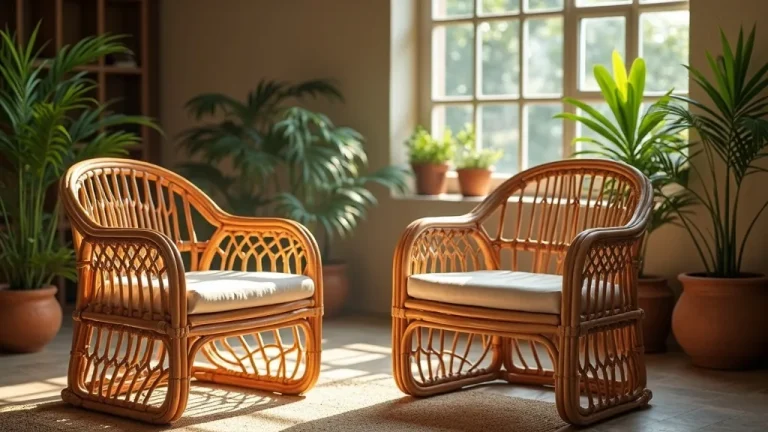
Bali Rattan Export Trends 2027: Category Mix
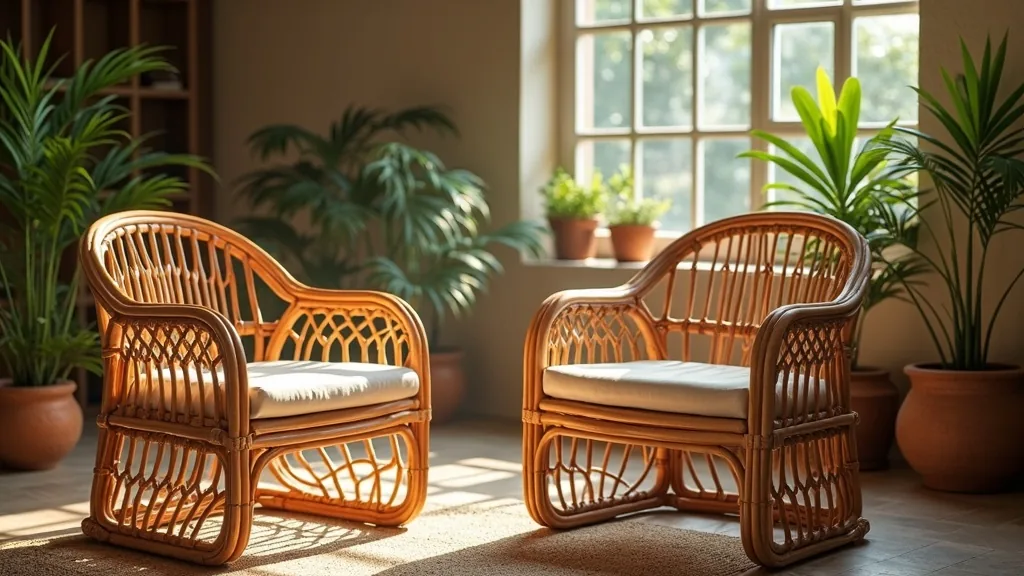
Bali rattan furniture export trends for 2027 point to four forces: compliance-led buying under the EU’s EUDR and ESPR, neutral-tone modular sets, Indonesia’s craft-plus-compliance edge over Vietnam and China, and a hospitality refurbishment wave. Treat this as an outlook grounded in dated 2026 signals — not a prediction — anchored by Indonesia’s rattan trade reaching 69 countries and 400-plus buyers by 2024.
What Did 2026 Signals Say About 2027 Demand?
Start with the audited baseline. BPS-Statistics Indonesia reports that Bali Province exported goods worth US$634,496,917 in 2024. Nationally, Indonesia’s rattan furniture exports under HS code 94038300 came to roughly USD 14.6 million in 2024, and by that year the country’s rattan trade served 69 countries with more than 400 active buyers. Multiple market studies project global rattan furniture growth through 2030-2033. Those are the last full-year figures available as this outlook is written in mid-2026.
What changed during 2026 is the paperwork, not the appetite. The table pairs each dated signal with the effect wholesale buyers should plan around in 2027.
| Dated 2026 signal | What it likely means for 2027 |
|---|---|
| EUDR began applying to large EU operators on 30 December 2025 | EU buyers request frame-timber legality files with every purchase order |
| Furniture named a priority group in the ESPR working plan (April 2025) | Durability and repairability data enter quotation paperwork |
| Neutral palettes dominated 2025-2026 collection launches | Sand, grey, and honey anyaman displace bold retro color |
| Bali’s hospitality refurbishment cycle maturing post-recovery | Contract projects compete with retailers for workshop slots |
None of this rewards waiting. Importers who lock specifications and frame-timber documentation with a bali rattan exporter during 2026 will enter 2027 with compliance files already built, while late movers scramble for production slots that hospitality projects are also chasing.
Will EUDR and ESPR Reshape Who Buys From Bali?
For EU-bound orders, yes — mostly by changing what a purchase order must carry, not who wins it. The EU Deforestation Regulation began applying to large operators on 30 December 2025, with smaller enterprises phased in during 2026; Brussels has already moved these dates once, so treat every timeline as subject to change. Rattan itself is a climbing palm, not timber, and is not a listed EUDR commodity. The exposure sits in the frame: teak, mahogany, or mindi components can pull a finished piece into scope.
Here Indonesia holds a quiet advantage. Since 1 January 2015, SVLK (Sistem Verifikasi Legalitas Kayu) timber-legality verification has been mandatory for wood and wood-furniture exports — a decade of practice producing exactly the legality paperwork EUDR-era buyers now request. SVLK covers the wood component; no source extends it to rattan fiber itself, and honest suppliers say so.
The Ecodesign for Sustainable Products Regulation entered into force in July 2024, and the European Commission’s first working plan, adopted in April 2025, named furniture a priority product group. Binding rules land later, but 2027 buyers will likely front-run them with durability and chemical-content questions. Add Germany’s existing customs demands — detailed product descriptions, value declarations, country-of-origin certificates — plus EU flame-retardancy rules, and the winning exporter in 2027 is the one whose dokumen ekspor arrive complete the first time.
Why Are Neutral-Tone Modular Sets the Product Story for 2027?
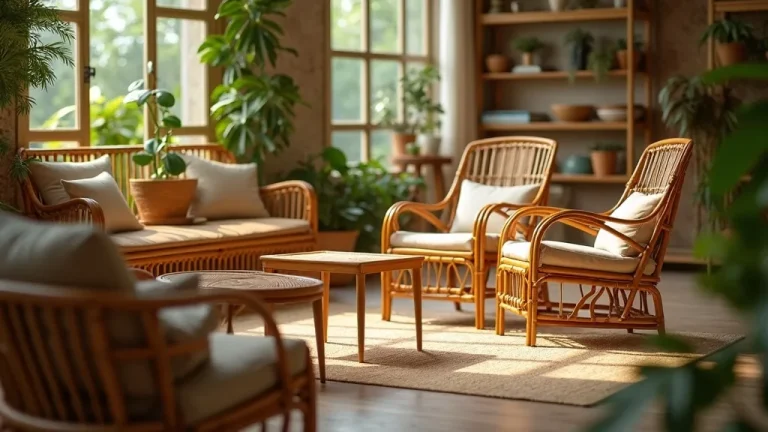
Because they solve two problems at once: what sells on the floor and what packs in the box. Collections shown through 2025-2026 leaned into quiet palettes — sand, oat, smoke grey, warm honey — and away from lacquered color. Modular formats improve container math: flat-stacking corner and lounge units cut cubic meters per seat, which matters when your minimum order is framed as a mixed 20 or 40-foot container that cubes out.
Spec requests we expect to dominate 2027 order books:
- Washed and natural finishes on natural rotan for covered lounges, lobbies, and dining rooms
- HDPE synthetic weave (anyaman sintetis) for pool decks and open terraces — natural rattan degrades in direct rain and sun, and no honest seller claims otherwise
- Modular lounge systems with removable cushion platforms, letting hospitality buyers source fabric regionally for fire-code reasons
- Mixed-material builds — powder-coated aluminium under synthetic weave, teak or mindi under natural cane
On price: a modular three-seat natural-rattan lounge unit from workshops in Bali and Cirebon might sit somewhere in a USD 180-320 FOB band as of 2026 — an indicative example only, subject to change. Real pricing is quoted per piece and per specification from your item list, loaded FOB Semarang or Surabaya.
Can Indonesia Hold Its Craft-Plus-Compliance Edge Over Vietnam and China?
The structural argument runs through a trade rule. Under Trade Regulation Permendag No. 38 of 2017, raw, unprocessed rattan may not be exported from Indonesia, while semi-finished rattan and finished rattan furniture can. Then-Trade Minister Enggartiasto Lukita, speaking in Cirebon and reported by ANTARA News, put it plainly: raw rattan cannot leave, the semi-finished product can. The effect is that cane, weaving skill, and finishing value stay inside Indonesia — Cirebon holding the historic anyaman cluster, Bali serving as the design-led finishing and export hub.
One honesty note: rattan export policy has been politically contested before — a prior ban was lifted and re-evaluated — so no exporter should sell you regulatory permanence. As of 2026, the rule stands.
| Factor | Indonesia (Bali/Cirebon) | Vietnam | China |
|---|---|---|---|
| Natural rattan raw material | Kept in-country by Permendag 38/2017 | Largely imported | Largely imported |
| Natural-weave craft depth | Generations-deep clusters | Strong but narrower | Thinning as labor shifts |
| Timber-legality paperwork | SVLK mandatory since 2015 | Still building | Still building |
| Synthetic-weave volume | Growing | Very strong | Very strong |
| Custom and OEM flexibility | Artisans adjust dimensions, finishes, colors to spec | Moderate | Factory-standard |
How Real Is the Hospitality Rebound for Woven Furniture?
Real enough to plan freight around. Properties that opened or refreshed during the 2021-2022 reopening wave reach their first soft-refurbishment window around 2027, and mebel rotan — durable, repairable, visually tied to the region — is a natural fit for tropical and resort projects. That demand competes directly with retail importers for the same workshop capacity around Jimbaran and Denpasar, where most Bali export warehouses and large-scale suppliers are based.
Plan lead times honestly. Bali-to-Germany shipments typically run six to ten weeks including production, packaging, and sea freight, per logistics-guide figures current in 2026. Bali-to-Australia sea freight usually takes two to six weeks. Air freight exists but is rarely economical for bulky woven pieces. A hotel opening in Q3 2027 should have specifications with its supplier by late 2026 or the first weeks of 2027.
Who Should You Work With Before 2027 Order Books Fill?
The 2027 outlook rewards a specific supplier profile: one that shows SVLK files for wood components, documents country of origin to German-customs standard, prototypes from your diagrams or photos — Bali furniture guides confirm most artisans will adjust dimensions, finishes, and colors to buyer specification — and consolidates mixed natural and synthetic pieces into one cube-out container FOB Semarang or Surabaya.
None of the trends above is a prediction; all are dated 2026 signals pointing one direction. Buyers who treat compliance paperwork as a sourcing criterion rather than an afterthought, and who book production windows before the hospitality wave absorbs them, will buy better in 2027 than those waiting for trend reports to confirm what the order books already show.
Frequently Asked Questions
Will EUDR apply to rattan furniture shipped from Bali in 2027?
Rattan fiber is a climbing palm and is not a listed EUDR commodity — but frames of teak, mahogany, or mindi can bring a finished piece into scope. As of 2026 the regulation applies to large EU operators, with smaller firms phased in and timelines already shifted once. Ask suppliers for SVLK files on wood components and treat every date as subject to change.
Which rattan furniture styles will lead export demand in 2027?
Dated 2026 signals point to neutral-tone modular lounge and dining sets — sand, oat, and smoke-grey anyaman rather than bold color. Modular formats also pack more seats per container, which matters when minimums are framed as a mixed 20 or 40-foot load that cubes out. Natural rotan leads indoor and covered spaces; HDPE synthetic weave leads uncovered outdoor use.
Should buyers shift sourcing from Vietnam or China to Bali before 2027?
It depends on the product mix. For natural rattan, Indonesia’s Permendag 38 of 2017 keeps raw cane and weaving skill in-country — an advantage Vietnam and China cannot copy while the rule stands. For commodity synthetic-weave volume, Vietnam stays competitive. Many buyers now split programs: natural collections from workshops in Bali and Cirebon, high-volume synthetic lines elsewhere.
Keep Reading
Uncategorized
Bali Eco Resort Rattan Furniture Sourcing Guide 2027
Eco-resorts opening around 2027 should lock their Bali rattan furniture suppliers by mid-to-late 2026: specify traceable Indonesian rotan — finished…
Uncategorized
Rattan FF&E Investment in Bali Hospitality: 2027
Rattan furniture investment opportunities in Bali hospitality for 2027 are procurement opportunities, not securities: the villas, beach clubs, and eco-resorts…
Uncategorized
RCEP Supply Chains for Bali Rattan Exporters: 2027
For 2027, an RCEP supply chain strategy for Bali rattan exporters comes down to three moves: claim preferential tariffs where…