

Choosing Reliable Bali Rattan Suppliers
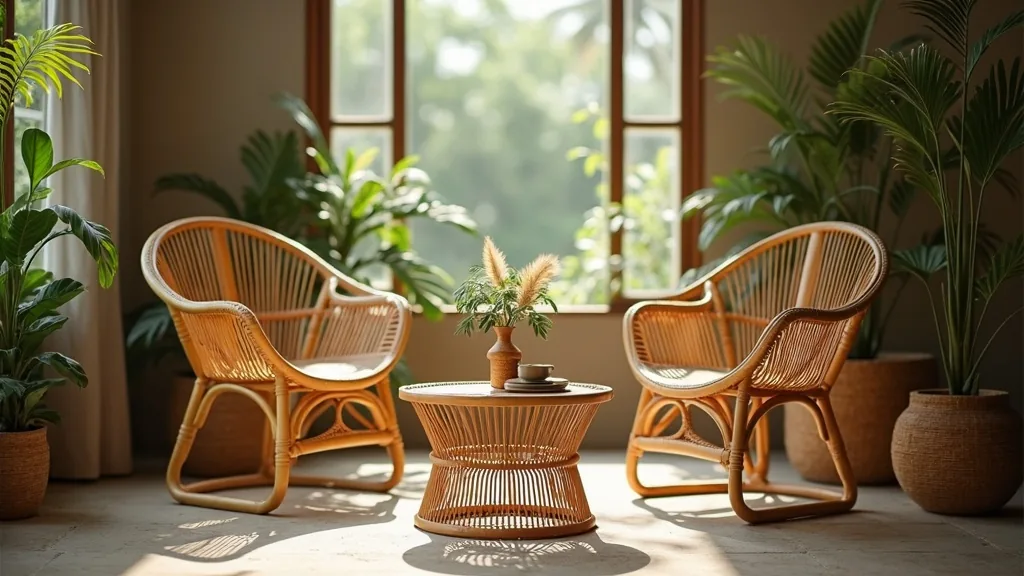
To choose a reliable Bali rattan furniture supplier, verify the company’s Indonesian business registration (NIB and NPWP), confirm the bank account is in the company’s name, order paid samples before any production deposit, and treat guaranteed fixed prices or missing export documents as walk-away red flags. Third-party inspection closes the loop before shipment.
Every season, importers wire deposits to “suppliers” who turn out to be middlemen with no workshop, or a WhatsApp number attached to a personal bank account. The checks below take one to two weeks and cost less than a single lost deposit. Run them in order.
Why Does Supplier Verification Matter More in Bali Than Elsewhere?
Because the market is fragmented and the paperwork is specific. By 2024 Indonesia’s rattan trade served 69 countries with more than 400 active buyers, and BPS-Statistics Indonesia records Bali Province exporting goods worth US$634,496,917 that year. Behind those figures sit hundreds of workshops, export warehouses concentrated in Jimbaran and Denpasar, the historic weaving cluster in Cirebon, and a long tail of brokers of very mixed quality.
There is also a regulatory layer that honest suppliers understand and dishonest ones ignore. Under Trade Regulation Permendag No. 38 of 2017, raw unprocessed rattan may not be exported from Indonesia; only semi-finished rattan and finished furniture can leave the country, a policy then-Trade Minister Enggartiasto Lukita explained in Cirebon in remarks reported by ANTARA News, Indonesia’s state news agency. A supplier who casually offers you raw rattan poles is either uninformed or willing to break export law. Either way, that is not who should be holding your money.
Once a workshop passes the full due-diligence sequence below, most importers stop shopping around and consolidate volume with an established rattan furniture bulk supplier program, because re-verifying a new workshop for every container costs more than it saves.
Which Legal Documents Should You Verify Before Sending Money?
Ask for five items in your first serious enquiry. A legitimate exporter can produce all of them within a business day; hesitation on any of them is information.
| Document | What it proves | How to verify |
|---|---|---|
| NIB (Nomor Induk Berusaha) | Legal registration and the right to export | Ask for the number; the supplier’s OSS profile must match the company name on the quotation |
| NPWP (tax number) | Active Indonesian tax registration | The number should appear on the commercial invoice and match the corporate name exactly |
| Akta pendirian (deed of establishment) | The company legally exists and names its directors | Cross-check through Indonesia’s Ministry of Law AHU records or a local agent |
| SVLK certificate | Timber legality for wooden frame components | Mandatory since 1 January 2015 for wood-furniture exports; request the certificate number and issuing body |
| Redacted past export set | A real shipping track record | Bill of lading, certificate of origin, and packing list showing FOB Semarang or Surabaya and furniture HS codes |
One nuance on SVLK: the Sistem Verifikasi Legalitas Kayu covers the wood component of furniture, so demand it when your pieces carry teak, mahogany, or mindi frames. A rattan-only supplier without it is not automatically suspect; a supplier selling teak-framed lounge sets without it is.
How Do You Run a Bank and Payment Reference Check?
Money is where fraud actually happens, so the banking check is short but non-negotiable.
- Match the account name to the akta. The beneficiary on the proforma invoice must be the registered company, not a director’s personal account and not a “sister company” you have never verified.
- Ask for a bank reference letter. Established exporters bank with major Indonesian banks and can request a simple letter confirming the account is active and in good standing.
- Structure the payment. As of 2026 the common pattern is a 30-50 percent telegraphic-transfer deposit with the balance released against the bill of lading copy. Never pay 100 percent up front on a first order, and treat any request for cryptocurrency or money-transfer apps as the end of the conversation.
- Send a test amount first. A small transfer confirms the banking details resolve to the right entity before the real deposit moves.
Why Order Samples Before Paying a Production Deposit?
Because a sample is the cheapest audit you will ever buy. Bali furniture guides consistently verify that workshops adjust dimensions, finishes, and colors to buyer specification, so send dimensioned drawings or reference photos and judge how precisely the sample matches them. On the piece itself, check weave tension and strand-width consistency, frame joinery (glued and screwed, not stapled), moisture content on natural rattan, and coating quality on synthetic weaves.
The sample stage is also an honesty test. Natural rattan is an indoor and covered-terrace material; synthetic HDPE weave is what survives open-air weather. A reliable supplier volunteers that distinction unprompted; one who promises natural rattan will last for years uncovered outdoors has just failed the test in writing. Sample costs are quote-based per piece and spec, and serious buyers pay them.
What Red Flags Should End the Conversation?
- Guaranteed fixed prices held for a year. Real quotations are per piece and per specification, and material costs move; any USD figure you see anywhere should be an indicative example, not a promise.
- Payment routed to a personal account or a company name that differs from the registration documents.
- No NIB, no NPWP, or excuses when you request the document set above.
- A vague physical address. Legitimate export operations can name their warehouse street in Jimbaran or Denpasar and will take a live video call from the floor.
- Raw rattan on offer, which Permendag 38/2017 has prohibited since 2017.
- Unrealistic schedules. Bali-to-Germany shipments typically run six to ten weeks including production, packing, and sea freight; a two-week promise on a container order is fantasy.
- Stock photography portfolios with no consistent workshop backdrop across images.
When Should You Pay for Third-Party Inspection?
On a first container, always. International agencies such as SGS, Intertek, Bureau Veritas, and QIMA all operate in Indonesia, and their fees are small against the value of a loaded 40-footer.
| Stage | Timing | What it catches |
|---|---|---|
| Supplier audit | Before the first deposit | Ghost workshops, undisclosed subcontracting, inflated capacity claims |
| During-production check | Around 50 percent complete | Wrong weave pattern, frame-material substitution, schedule slippage |
| Pre-shipment inspection | Goods 80-100 percent finished and packed | Finish defects, moisture problems, quantity shortfalls |
| Container loading check | At stuffing | Poor packing, crushed cartons, cube-out errors |
Indicative agency rates run roughly USD 300-350 per man-day as of 2026, subject to change and quoted per assignment. Make a passed pre-shipment report a written condition for releasing the balance payment: the supplier gets paid when the inspector confirms the goods match the specification you sampled months earlier.
Frequently Asked Questions
How can I verify a Bali rattan supplier’s business registration from overseas?
Ask for the NIB and NPWP numbers, then request a screenshot of the supplier’s OSS (Online Single Submission) profile; the company name, address, and business classification must match the quotation. Cross-check the deed of establishment through Indonesia’s AHU ministry records, or hire a Denpasar-based sourcing agent for a few hours to pull documents and photograph the premises.
What deposit terms are normal for a first order with a Bali rattan supplier?
A 30-50 percent telegraphic-transfer deposit with the balance paid against the bill of lading copy is the common pattern as of 2026, though every workshop negotiates its own terms. Pay only to a corporate account that matches the registered company name, never a personal account, and never agree to 100 percent up front on a first order.
Do I need third-party inspection for a first container of rattan furniture from Bali?
Yes. A pre-shipment inspection costs roughly USD 300-350 per man-day as of 2026, subject to change, against a container value many times that. Book it once goods are at least 80 percent finished and packed, and write the passed inspection report into your payment terms as the release condition for the balance transfer.
Keep Reading

Uncategorized
Bali Eco Resort Rattan Furniture Sourcing Guide 2027
Eco-resorts opening around 2027 should lock their Bali rattan furniture suppliers by mid-to-late 2026: specify traceable Indonesian rotan — finished…

Uncategorized
Rattan FF&E Investment in Bali Hospitality: 2027
Rattan furniture investment opportunities in Bali hospitality for 2027 are procurement opportunities, not securities: the villas, beach clubs, and eco-resorts…

Uncategorized
RCEP Supply Chains for Bali Rattan Exporters: 2027
For 2027, an RCEP supply chain strategy for Bali rattan exporters comes down to three moves: claim preferential tariffs where…