
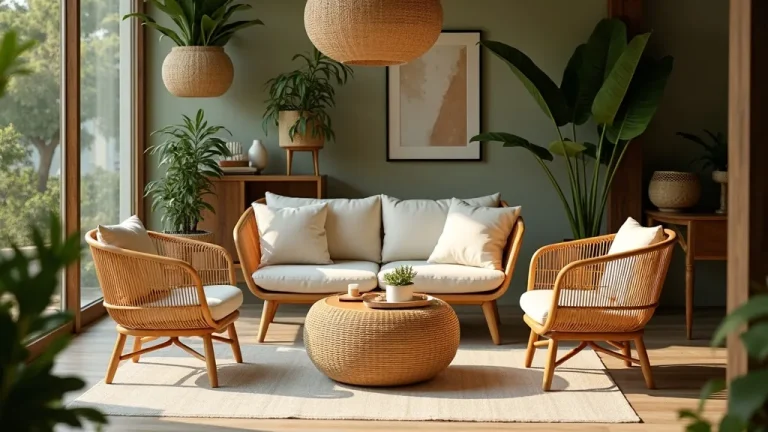
Rattan Garden Furniture Trends 2027 for Wholesale
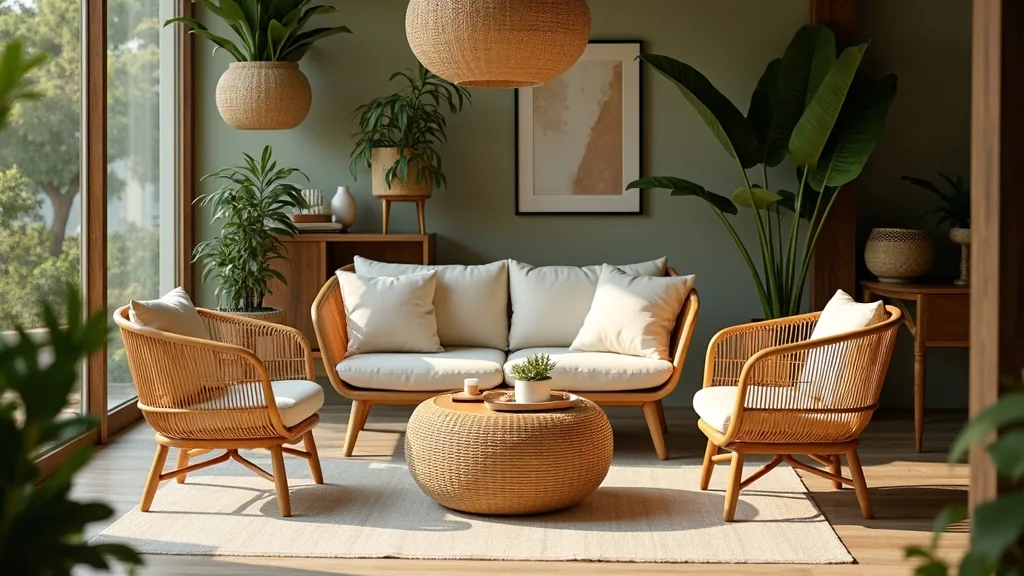
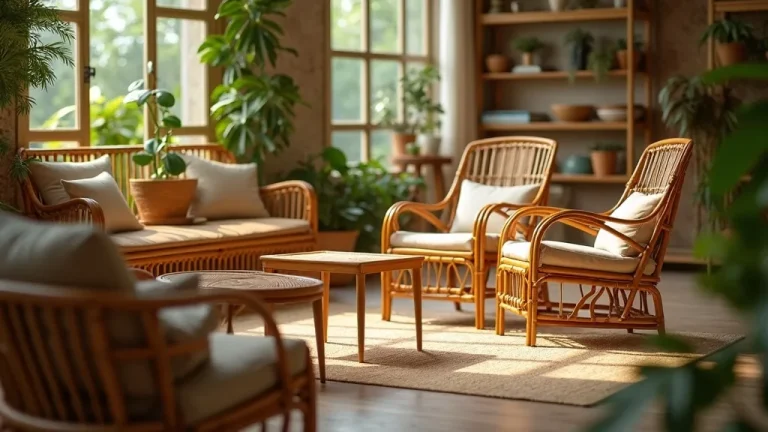
By 2027, neutral-palette rattan garden furniture — greige, sand, taupe, warm grey — plus modular lounge systems and space-saving stackables will likely move from premium catalogs into mainstream and discount wholesale expectations. That is an outlook read from dated 2026 signals, not a prediction: garden retailers should plan flexible, quote-based container assortments from Bali and Java workshops now, not in spring 2027.
One honesty note first. Trend articles age badly when they pretend to be forecasts. Everything below is grounded in what buyers could actually observe in 2026 — trade-fair assortments, catalog refreshes, Indonesia’s export data — projected one season forward. Where a number appears, it carries a date.
What Is Driving Rattan Garden Furniture Demand Into 2027?
Three forces, all visible in 2026.
First, the supply base is structurally protected. Under Trade Regulation Permendag No. 38 of 2017, raw rattan may not be exported from Indonesia, while semi-finished rattan and finished furniture can. Then-Trade Minister Enggartiasto Lukita, speaking in Cirebon and reported by ANTARA News, confirmed that raw rattan cannot leave the country but the semi-finished material is allowed. Weaving (anyaman) and finishing value therefore stays inside Indonesia — the reason finished-goods buyers keep returning to Bali and Cirebon rather than sourcing fiber and weaving elsewhere. Rattan policy has been politically contested before, so read this as the rule as of 2026, not a permanent guarantee.
Second, the trade is broad rather than concentrated. Indonesia’s rattan furniture exports under HS code 94038300 ran to about USD 14.6 million in 2024, and by that year the rattan trade served 69 countries with more than 400 active buyers. BPS-Statistics Indonesia reports that Bali Province alone exported goods worth US$634,496,917 in 2024 — the ecosystem behind those Jimbaran and Denpasar export warehouses.
Third, multiple market studies published through 2026 forecast global rattan furniture growth into the 2030-2033 window. Forecasts are not certainties, but they explain why discount chains now specify pieces only premium garden retailers carried three seasons ago.
Which Neutral Tones Are Buyers Specifying for 2027?
The neutral wave is not one color. It is a family of tones, each mapping to a different weave material and retail tier.
| 2027 tone direction | Typical weave material | Where it lands at retail |
|---|---|---|
| Greige (grey-beige) | HDPE half-round or flat synthetic weave | Garden centers, discount chains |
| Sand and oat | Flat HDPE on powder-coated aluminum | Mass-market modular sets |
| Taupe and mushroom | Mixed-tone HDPE strands for visual depth | Mid-market lounge systems |
| Warm grey to charcoal | Wide flat HDPE weave | Contract and hospitality terraces |
| Natural honey rotan | Genuine rattan pole and peel | Premium covered-patio and conservatory lines |
Two honest caveats belong in every buyer conversation. Natural rattan is a plant fiber: beautiful, repairable, and the honest premium story — but not built for open-air rain and UV. Synthetic HDPE/PE weave is the weather-resistant workhorse. Retailers stocking bali outdoor rattan furniture for uncovered gardens should weight orders toward synthetic weave on aluminum frames and reserve natural-fiber pieces for covered patio and conservatory SKUs.
Color naming is the second trap. One workshop’s “greige” is another’s “warm grey” — no standardized color or weave-grade codes exist across Indonesian suppliers. Approve physical strand samples before production starts, never photographs alone.
Why Are Modular Lounge Systems Moving Down-Market?
Modularity began as a premium design story. By 2026 the logistics argument was pulling it toward mainstream and discount price points, and 2027 assortments will likely reflect that:
- Modules pack tighter than fixed sofas. Armless seats, corners, and ottomans nest into a container far more efficiently than a welded three-seater, cutting freight cost per selling unit.
- Replacement economics. A damaged module is a small reorder; a damaged fixed sofa is a write-off.
- Smaller gardens. Urban buyers reconfigure an L-shape into two chairs and a bench rather than buying twice.
- Showroom flexibility. One SKU family builds five floor displays.
The practical shift for buyers is specification discipline: connector hardware, cushion platform dimensions, and weave direction must match across every module, across reorders. Bali furniture guides consistently verify that most artisans will adjust dimensions, finishes, and colors to buyer specification — send dimensioned drawings or photos so the maker fully understands the requirement, then lock a control sample.
How Should Garden Retailers Plan a 2027 Assortment?
A workable planning frame, based on how mixed containers actually cube out of Semarang and Surabaya, looks like this. Shares are a starting point to adapt, not a rule.
| Assortment block | Indicative share of container | Role |
|---|---|---|
| Neutral modular lounge (corners, armless, ottomans) | 40-50% | Core margin driver |
| Stacking chairs and nesting tables | 20-25% | Space-saving volume, fills container gaps |
| Dining sets, synthetic weave | 15-20% | Ticket builder |
| Natural rotan accent pieces (covered use) | 10-15% | Premium story, higher margin per cube |
Stackables earn their place twice: they answer the small-space consumer and they fill the awkward air above and between modular cartons, improving the cube-out that defines a sensible minimum order. The MOQ conversation with Bali suppliers is rarely a fixed unit count — it is a mixed 20ft or 40ft container that cubes out economically.
On timing, count backward from your floor date. Logistics guides put Bali-to-Germany rattan shipments at six to ten weeks all-in — production, packaging, and sea freight — while Bali-to-Australia sea freight typically runs two to six weeks. A March 2027 launch means specs and quotations confirmed around October-November 2026, earlier if OEM colorways need sampling rounds. Air freight exists but almost never pencils for bulky woven furniture.
What Will 2027 Wholesale Orders Actually Cost?
Honestly: no published number replaces a quotation. There is no verified industry-standard MOQ, no standard per-CBM price, and no universal weave-grade code for Bali rattan furniture — every figure is supplier-specific and negotiated per piece and per specification. As of 2026, indicative FOB examples circulating for planning purposes run from roughly USD 45-85 for a stacking synthetic-weave chair to USD 180-320 per lounge module — treat these strictly as illustrations, subject to change, from workshops in Bali and Cirebon generally rather than any named factory. Real pricing is quote-based from your item list.
Budget the paperwork as well as the goods. A standard export set is commercial invoice, packing list, bill of lading, certificate of origin, and the Indonesian export declaration. Wooden components — teak, mahogany, or mindi frames under some rattan lines — trigger fumigation certificates and, since 1 January 2015, SVLK timber-legality verification covering the wood element. EU-bound furniture must also meet European flame-retardancy and chemical-content rules.
The retailers who win 2027 will not be the ones who guessed the trend perfectly. They will be the ones whose neutral, modular, stackable program was specified, sampled, and on the water while competitors were still debating colors.
Frequently Asked Questions
Will neutral tones still be safe wholesale stock in 2027, or has the trend peaked?
Neutrals behave less like a trend and more like a base layer. The 2026 signal set — trade-fair assortments, catalog refreshes, replacement-cushion sales — still leans greige, sand, and taupe. Keep bolder color in cushions rather than weave, so a shift in taste costs you fabric, not containers. Date-stamp your plan and re-check signals each buying season.
Which modular rattan configurations make sense for small-garden customers in 2027?
Prioritize left and right corner modules, armless middle seats, and a chaise end that turns an L-shape into a U-shape, plus storage-box side tables. Small-garden buyers reconfigure rather than replace, so modules that work in two-, three-, and five-piece layouts outsell fixed sofas. Ask workshops in Bali and Cirebon for connector-hardware samples before committing a container.
How early should I place a 2027-season order for modular rattan sets from Bali?
Count backward from your floor date. Bali-to-Germany shipments typically take six to ten weeks including production, packing, and sea freight, per logistics-guide figures, and Bali-to-Australia sea freight alone runs two to six weeks. For a March 2027 garden launch, confirm specifications and quotations by October-November 2026 — earlier when OEM colorways require sampling rounds.
Keep Reading
Uncategorized
Bali Eco Resort Rattan Furniture Sourcing Guide 2027
Eco-resorts opening around 2027 should lock their Bali rattan furniture suppliers by mid-to-late 2026: specify traceable Indonesian rotan — finished…
Uncategorized
Rattan FF&E Investment in Bali Hospitality: 2027
Rattan furniture investment opportunities in Bali hospitality for 2027 are procurement opportunities, not securities: the villas, beach clubs, and eco-resorts…
Uncategorized
RCEP Supply Chains for Bali Rattan Exporters: 2027
For 2027, an RCEP supply chain strategy for Bali rattan exporters comes down to three moves: claim preferential tariffs where…